

www.niger-meteorite-recon.de
Bassikounou Meteorite Fall

go to page 1 | 2 | 3 | 4 | 5 | Maps & Appendix


By Svend Buhl & Matthias Baermann


Geography and topography of the fall area


Overlay of satellite data and topographic chart showing the Erg al Taha in the north and the Oulimjan sandstone mesa butte in the north-east of Bassikounou
About 1000 kilometres east by southeast of the capital Nouakchott in the far south-eastern corner of Mauretania lies the city of Bassikounou. Roughly 2000 inhabitants populate the village which is a major junction in the traffic across the near border to Mali, especially to the city of Timbuktu. Bassikounou, or “Bassiknou” is inhabited mainly by Fulbe, Soninké, Wolof and a small number of Bambara and Touareg.

The ancient caravan route from the Atlantic coast via Nema to Timbuktu passes through the city west to east. Coming from the south is the piste from Nampala in Mali via Koussana. Bassikounou has no airport and is only connected by dust roads to the rest of the Mauritanian infrastructure. The area is considered unsafe for western travellers.

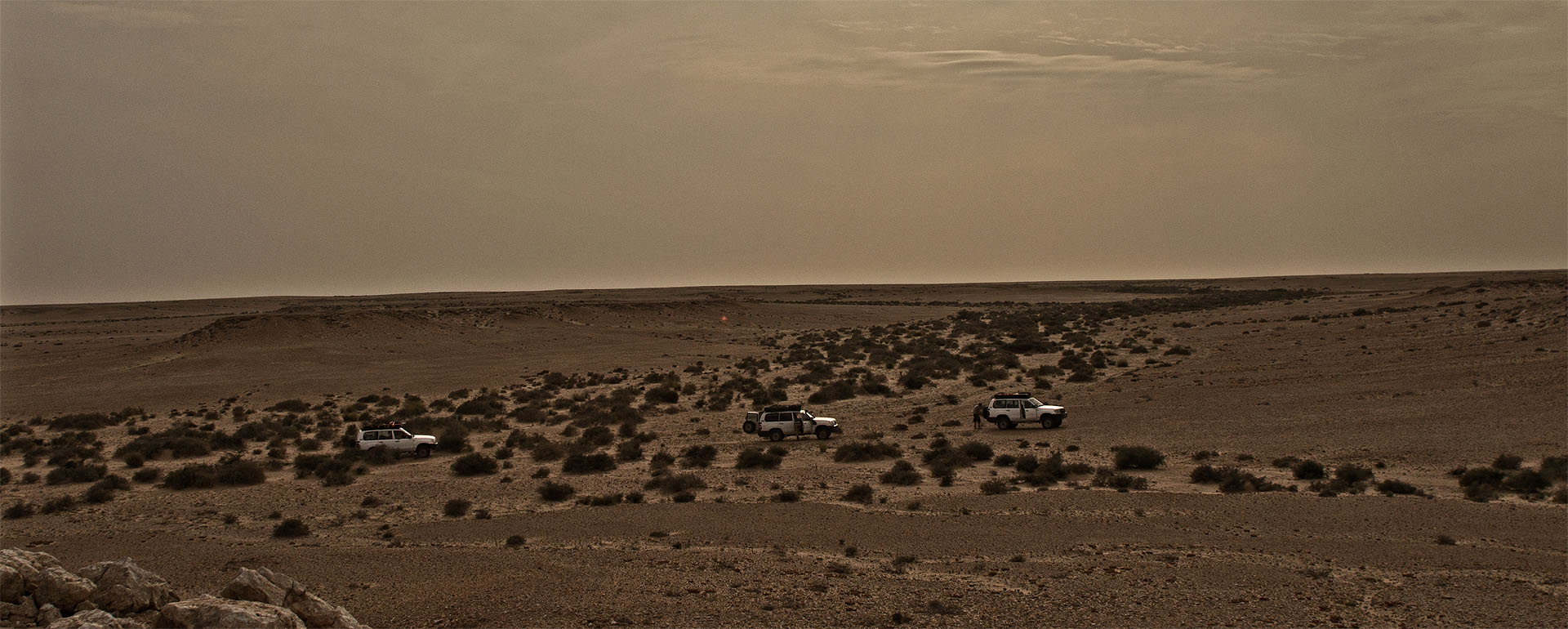
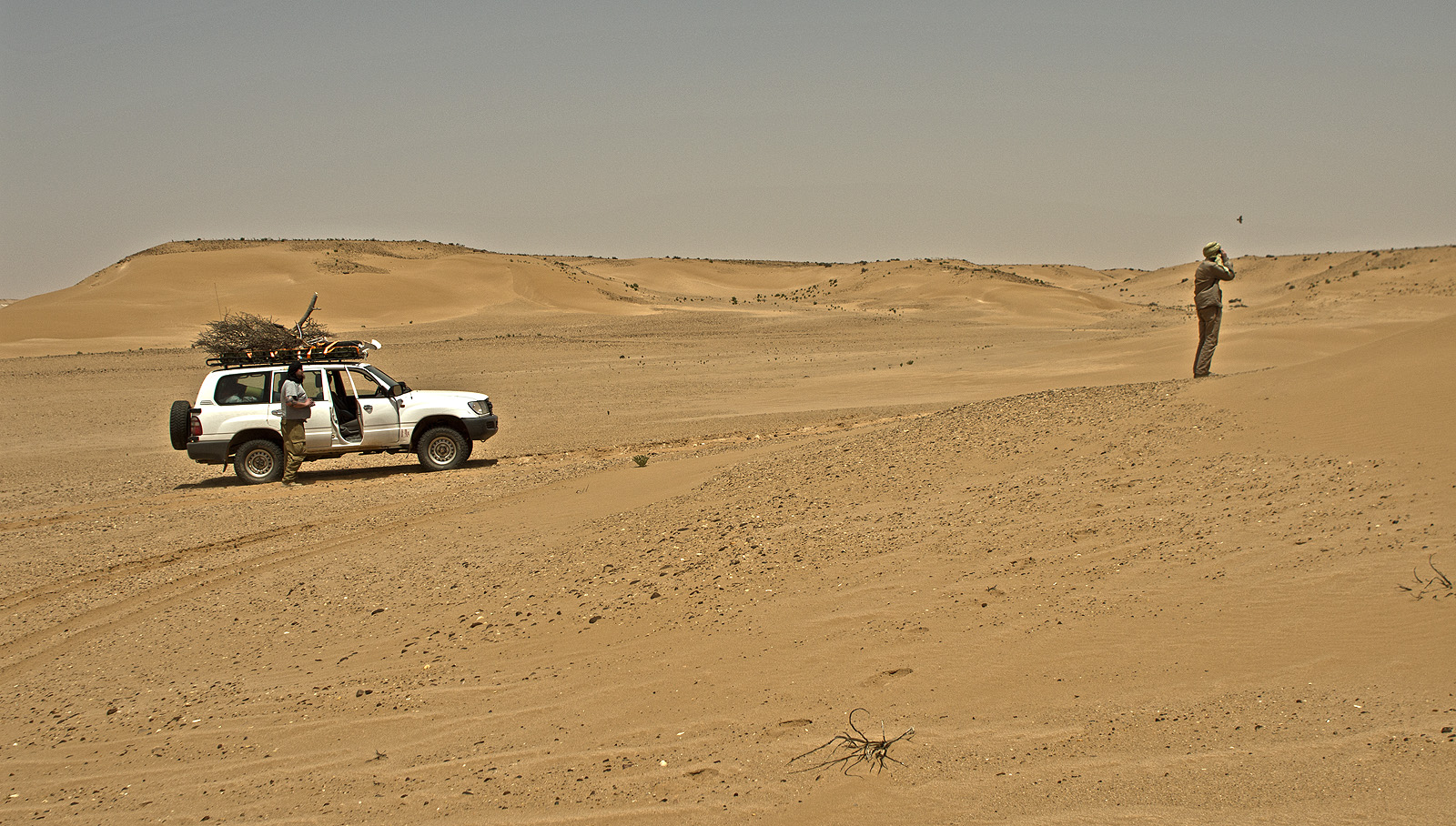
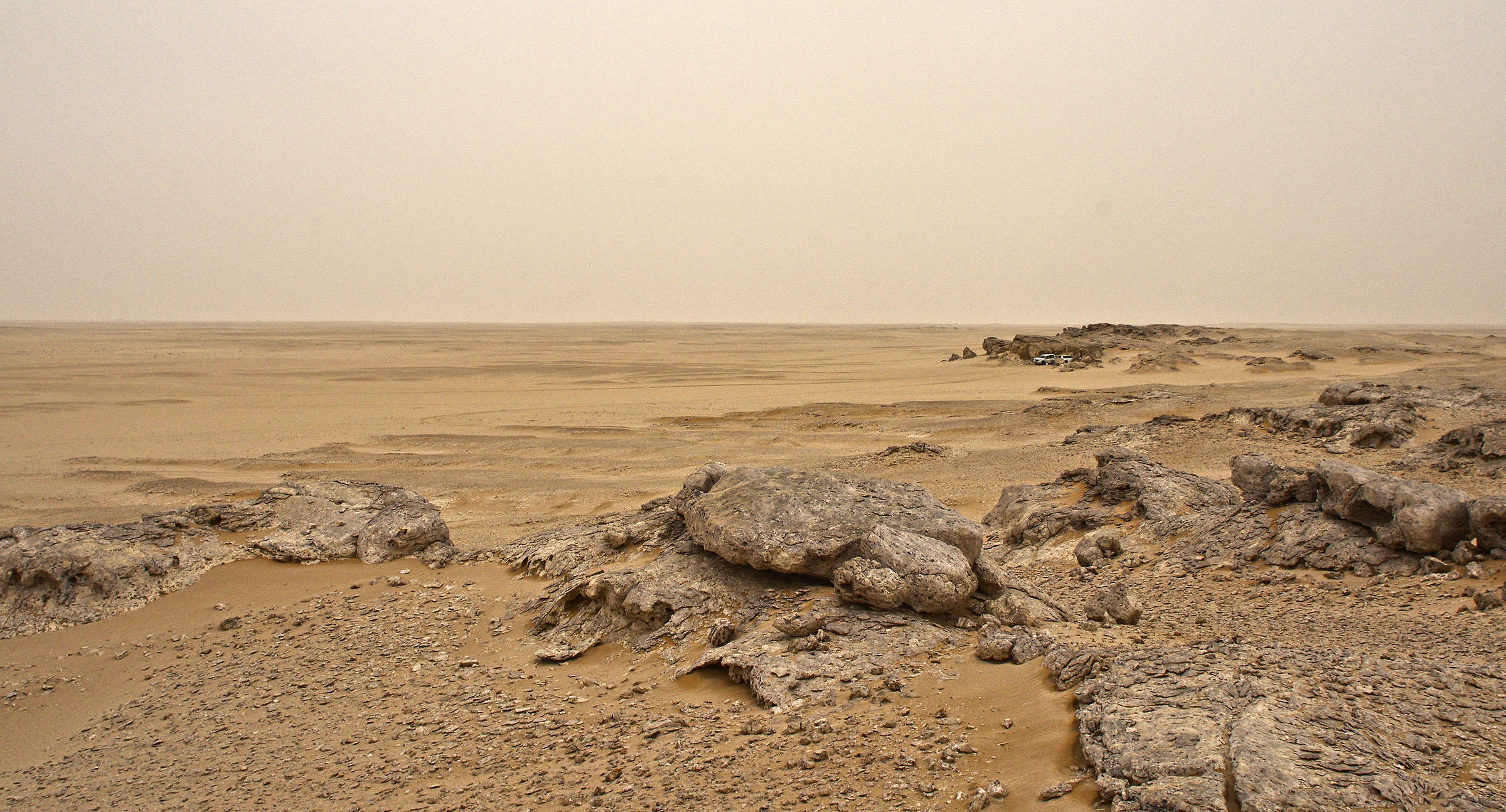
Bassikounou is situated in a broad south-west north-east oriented depression at the southern edge of the Erg Al Tarha. The latter resembles the south-eastern tip of a dry and mainly rock and sand covered chain of desert plateaus (Dhar) bordered by cliffs towards the south east. The Erg gently ascends over Dendara and Quatala to the Dhar of Nema in the north- west. North and north-eastwards of Bassikounou the terrain is mainly Erg and Hamada over 1000 kilometres before the mountainous Adrar region begins in the borderland to Algeria.

About 15km east of the city the Bassikounou depression is divided in two arms by the Oulimjam mesa-butte of continental sandstone that stretches in north-easterly direction across the border to Mali. The terrain opening in the south towards Mali is a savannah like bush land with little annual winter rainfalls.

The Erg surfaces beginning 10 kilometres north of Bassikounou are mostly composed of fractured shales of Mesozoic continental sandstone and Palaeozoic dolerite. Sparse vegetation in the Bassikounou depression and the advantageous topographic situation protecting against wind erosion allowed a soil accumulation.


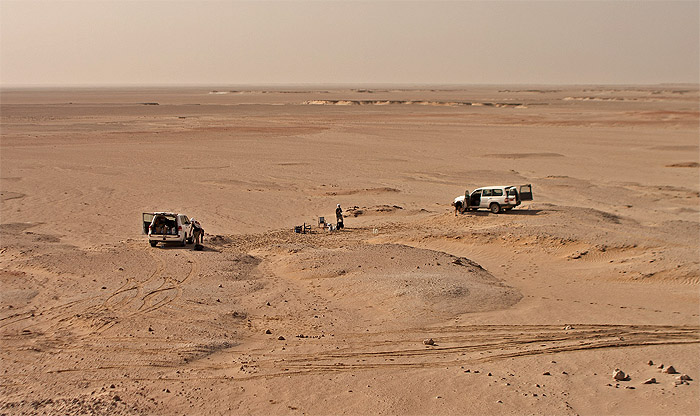
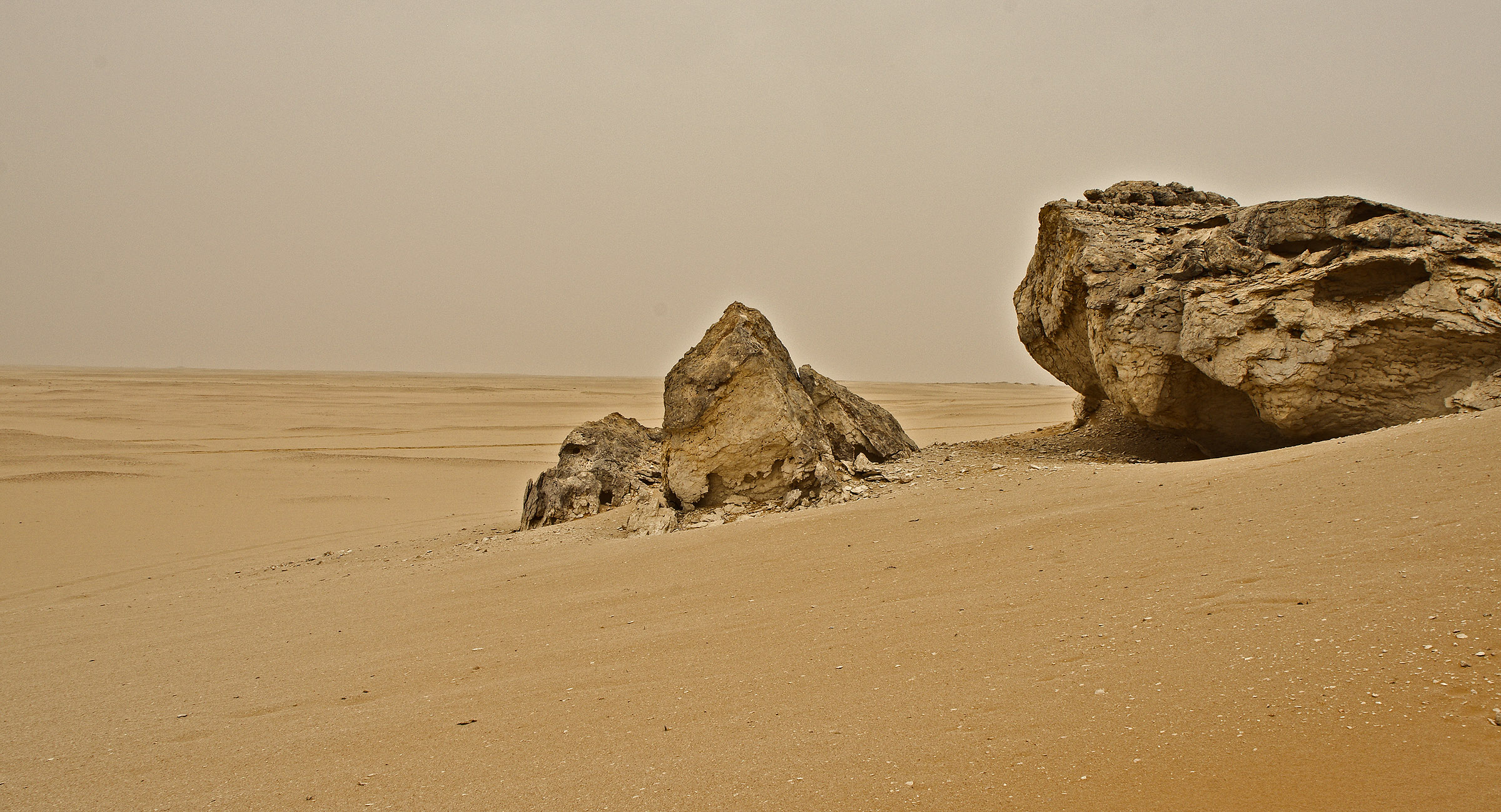
The Oulimjam cutting into the strewn field from the east. Several Bassikounou meteorites have been found on the top of the plateau. In the background there is a dense grow of Leptadenia pyrotechnica or "merekh" in Arab. Photo courtesy of M. Zeroual

Two main types of soil are abundant in the area. A mineral rich laterite soil composed of fine and coarser grained weathering products of the continental sandstone, quartzite and dolerite. And second, a fine grained chalky soil alternating with clay horizons. In some areas within the strewn field, particularly in the south the weathered red sandstone appears as surface bedrock.

Fireball and sound phenomena

During the cold and cloudless night at 04:00hrs in the early morning of October 16, 2006 the people in the Dhar Al Nema and the Hodh Ech Chargui regions were alarmed by a bright and long lasting fireball that appeared in the north-east. The phenomenon was visible at least up to 140 km north-east and 90 km south of Bassikounou.

The area in which the descending fireball could be seen covers about 36,000 km2 of mostly unpopulated desert. The limited number of eye witness reports (17 in Bassikounou, 6 in the Dhar al Nema, 6 in other locations) from the isolated area however includes a considerable uncertainty factor in the direction and duration of the phaenomenon and in the area of visibility.

Eyewitnesses from Bassikounou explained that three burning spheres could be seen descending from the skies with a breathtaking speed. The eyewittnesses from the Dhar al Nema described one fireball as “bright as day”, “enormous” and “too bright [to look at]”. All eye witnesses are consistent in that the fireball(s) travelled with enormous speed and lasted 30 -40 seconds. Some claimed that it lasted “one minute”. In the last seconds of the phenomena the three fireballs culminated in an “explosion of light” and sparks during which “the night became as bright as day”. This final eruption of emitted light lasted at least four or five seconds indicating that the final brake up of the meteorite occurred successively.


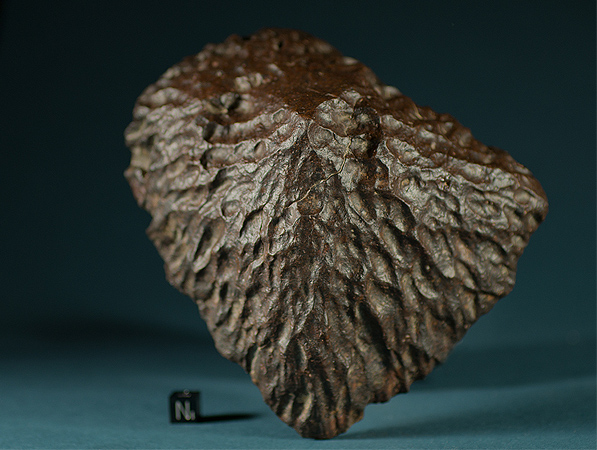
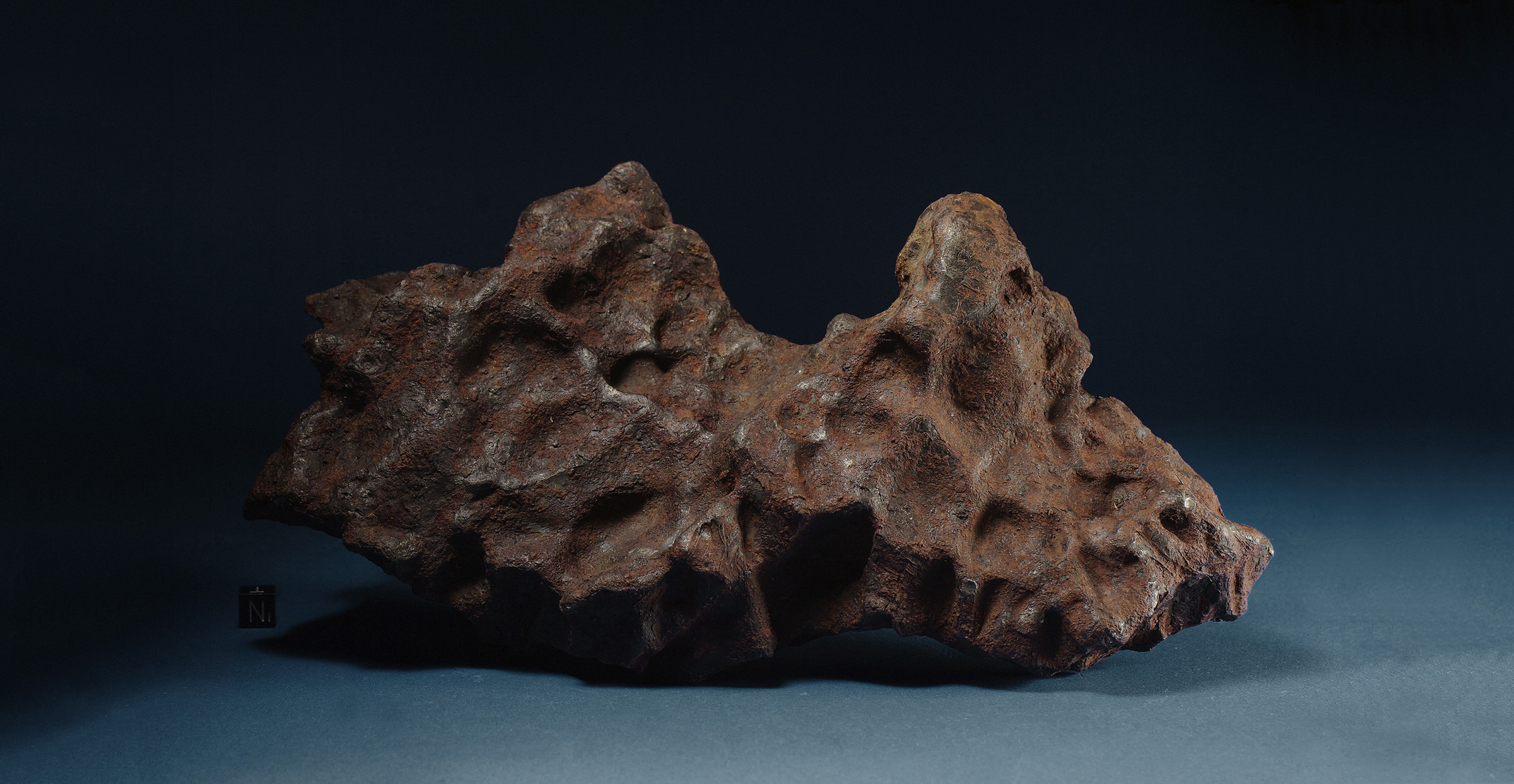
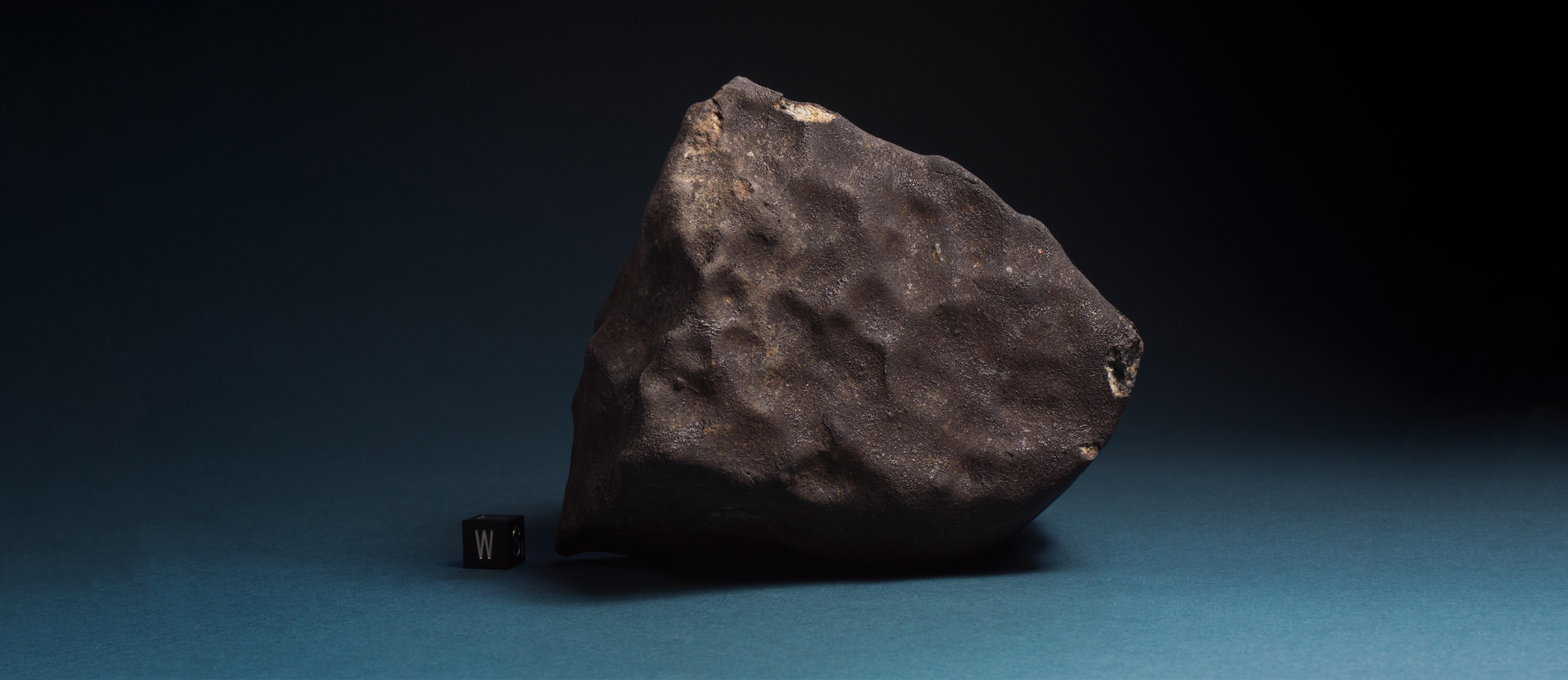
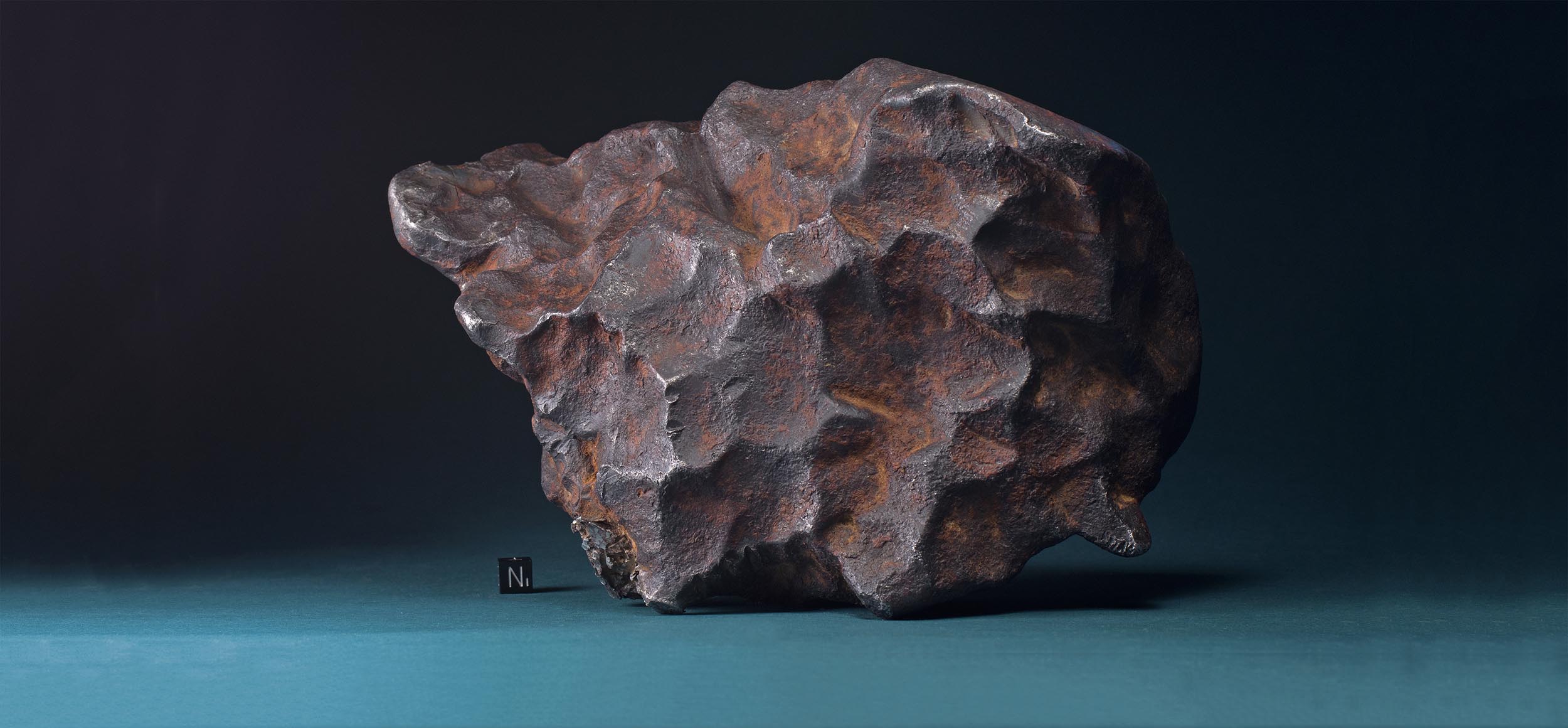
Distribution ellipse of the Bassikounou meteorite fall. Numbers indicate find location of the El Moichine mass (1), several smaller masses of unknown weight (2,3,4) and a 1304gm mass (5) found on the Djebel Oulimjam (catalog # 011)

“A big star fell down at Bassikounou” Beille Mint Cheikh, a 68 year-old resident of the Dhar al Nema region told us when asked for what had happened in the night of October 16. “It was a calm autumn night and many stars were shining. Early in the morning all of a sudden one became very bright. It travelled very fast towards the direction of Bassikounou and brightened the sky for a long while. The scene lasted for a minute; it was extremely abnormal, unusual and indescribable.”

Apparently the fireball could also be seen from the area 11 -19 km east of Bassikounou where the meteorite fragments fell. Unfortunately no detailed description on the light phenomena could be obtained from there. All witnesses in the Bassikounou area and east reported “thunder” and “thunder like sounds” accompanying the fireball. Because thunder in Mauretania is always a sign of rain and the latter being existentially important for the cattle and goat breeding nomads everybody got up to see where the thunder came from and where the rains may fall.


Two eye witnesses; Mrs. Beille Mint Cheikh, 68, and Mrs. Mariem Mint Yebbe. Photo Courtesy of Mohamed Yahya
As no clouds could be seen and the noise grew abnormally strong panic broke out in a number of villages and particularly in the city of Bassikounou. Several people told our correspondent Mohamed Yahya Ould Abdel Wedoud that they were convinced “an earthquake" or "Doomsday" is coming.

“Some people were scared, puzzled and completely lost. They did not know what was happening in the nature around them and the old people told them that they had never experienced anything similar falling from the skies. Some began to pray to Allah", Mariem Mint Yebbe, an eyewitness reported.

click to continue

go to page 1 | 2 | 3 | 4 | 5 | Maps & Appendix


More expedition reports in Meteorite


  © 2001-2008 NigerMeteoriteRecon