

|
|
|
www.niger-meteorite-recon.de
Bassikounou Meteorite Fall
go to page 1 | 2 |
3 |
4 |
5 |
Maps & Appendix

By Svend Buhl & Matthias Baermann
|
Intelligence background
|

|
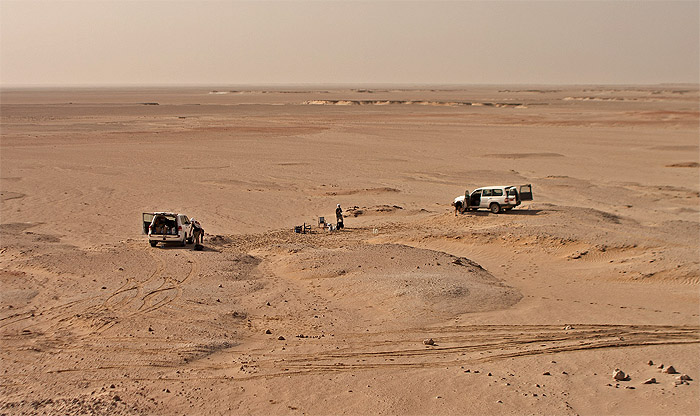
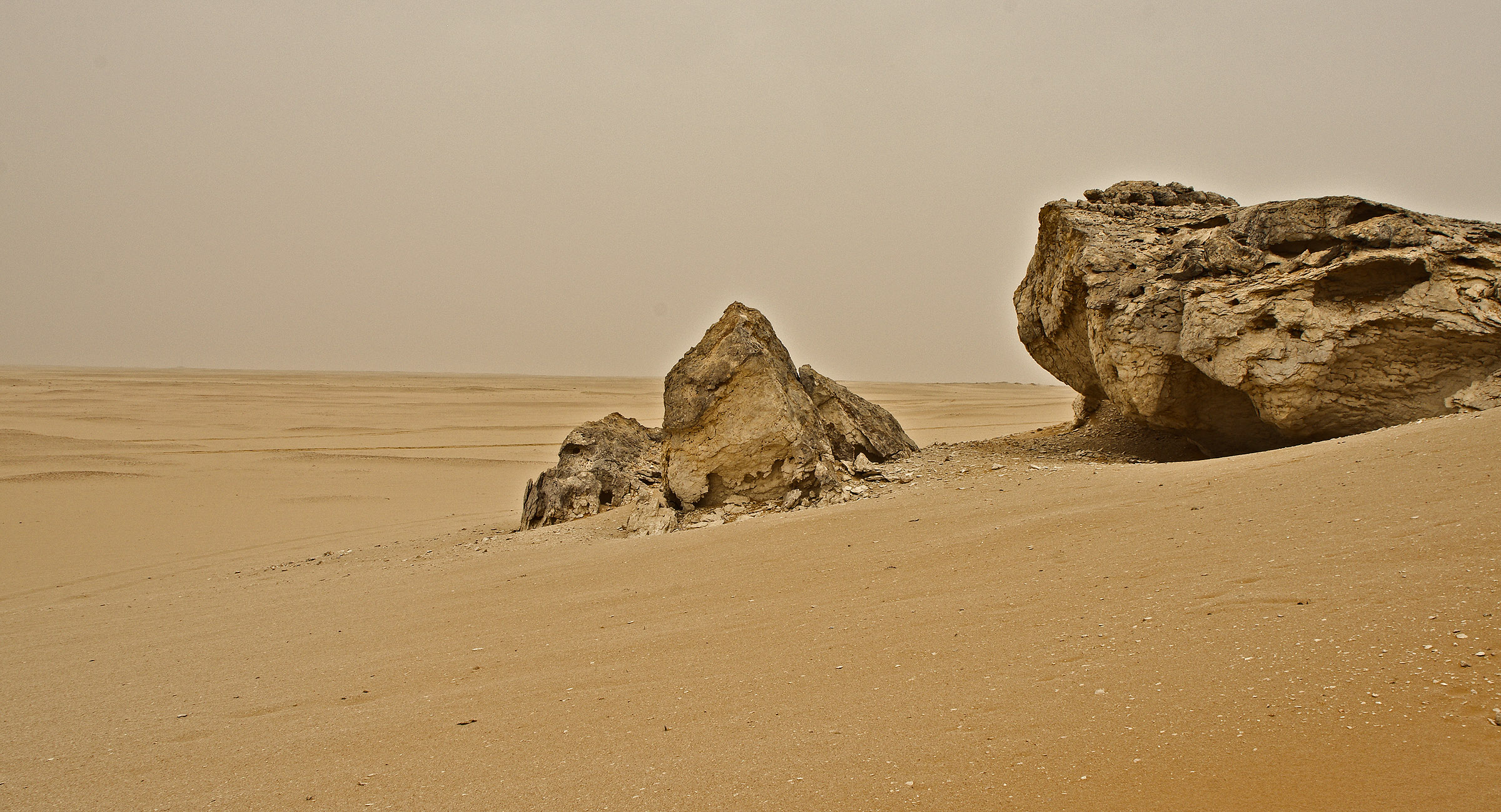
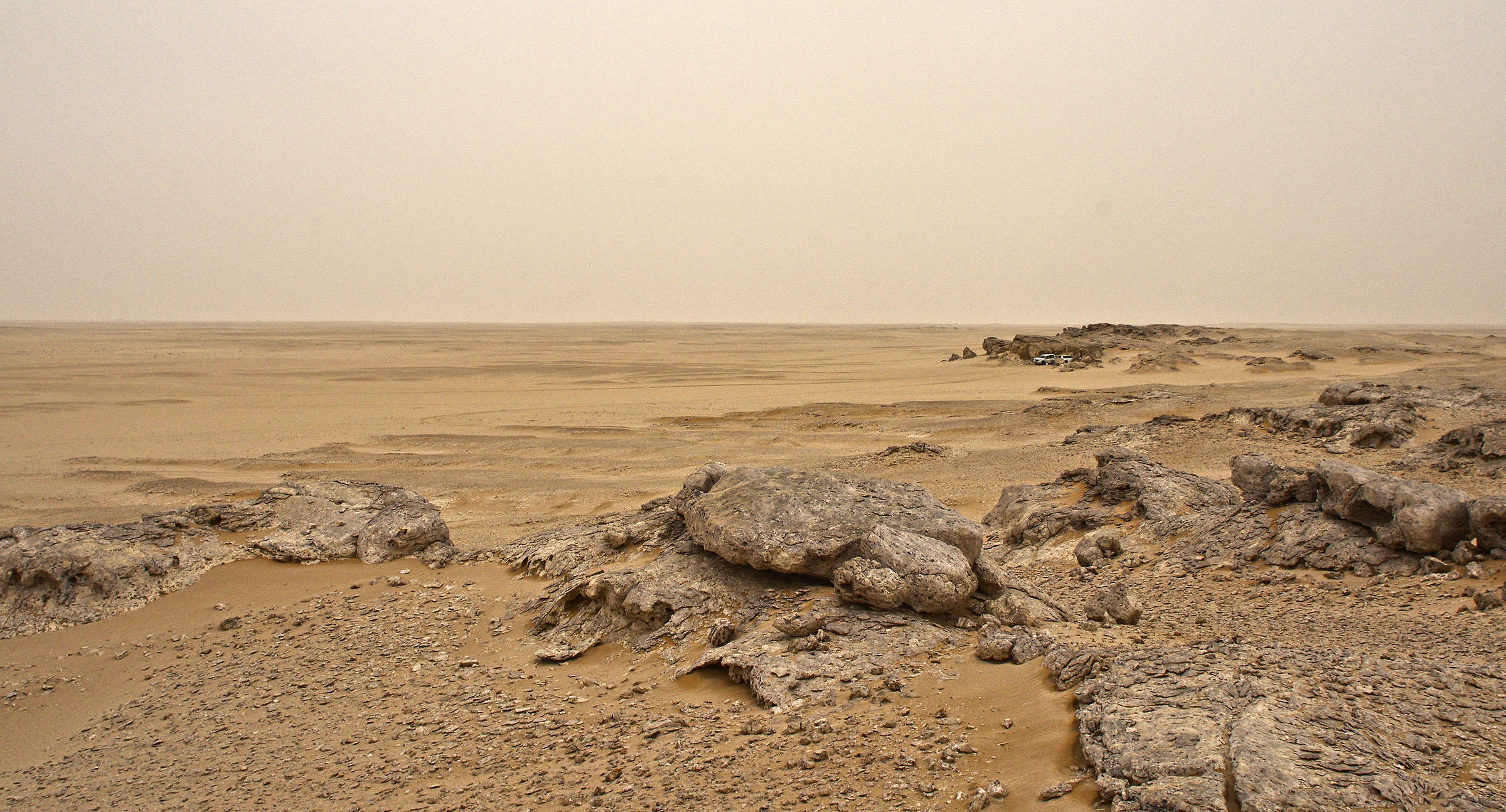
The Bassikounou area is known among the cattle breeding
nomads of south east Mauritania and northern Mali for its rich grazing lands.
Photo courtesy of Mohamed Zeroual
|
|
Widely unnoticed by the meteoritic community on
October 16, 2006 at 04:00 hrs a meteorite fell
at the village of Bassikounou in southeast Mauretania.
Despite the fact that the event caused the
inhabitants of the huge but sparsely populated
region to expect the end of the world, only few
details of the event were published in the local
Mauritanian media. But not even these made it
outside the country and into the planetary network
of communication.
The rock from space that had arrived with
fire and thunder – disappeared shortly after
in the dusty and isolated wastelands of the Sahara
desert. Until spring 2007 it remained a witnessed
but “unknown” fall.
Due to the extreme remoteness of the fall
area it took months until meteorite fragments
collected by locals since the morning after
the fall found their way to people who could
value their importance. Obtaining information
on these stones, their find circumstances and
the observations previous to their recovery
proved to be a Herculaneum task.
There isn’t any other direct means of communication
to the fall site than by Thuraya satellite phone.
Detailed Maps of the fall site are almost impossible
to obtain. The average level of education in the
extremely poor area is extremely low. If an eye witness
was finally identified and contacted, his or her means
of giving usable descriptions of what had happened were limited.
There are no cameras in the area that could have
recorded the trajectory of the bolide.
Because the fall occurred in the early morning during
a cold night most witnesses were alarmed not until
detonations rumbled the area. At this time the fireball
had already ceased. Due to this fact only a limited
number of observations exist on the fireball itself.
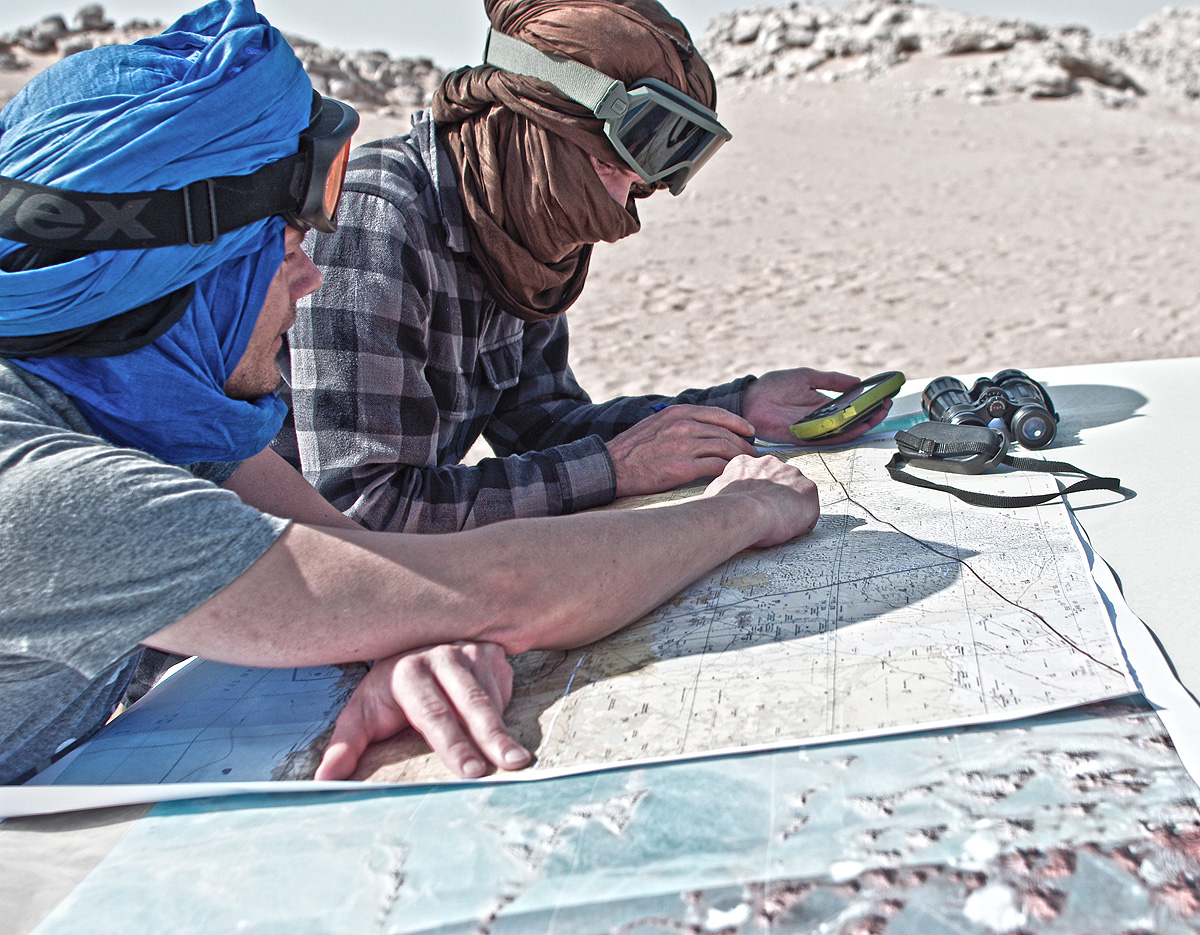
With the assist of a local Mauritanian journalist,
local authorities and field scientists familiar with the
area, the authors Svend Buhl and Matthias Baermann attempt to draw a
picture of the meteorite fall, its background,
reception and scientific analysis.
Despite the fact, that the picture is still incomplete
the authors are nevertheless convinced that their work
should see the light of public. They hope that their account
can function as an exemplary case to aid the understanding
and recovery of future meteorite falls in isolated areas.
|

|
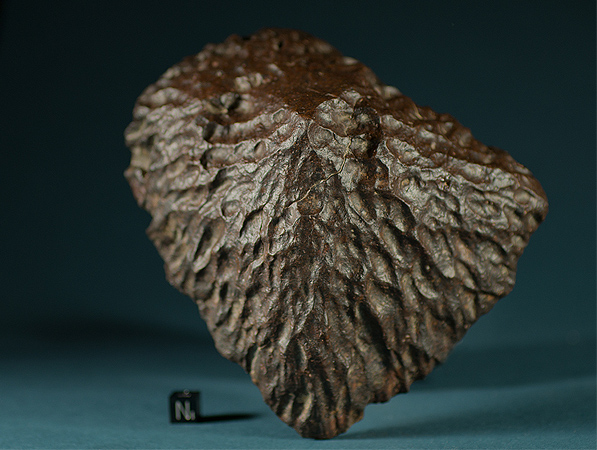
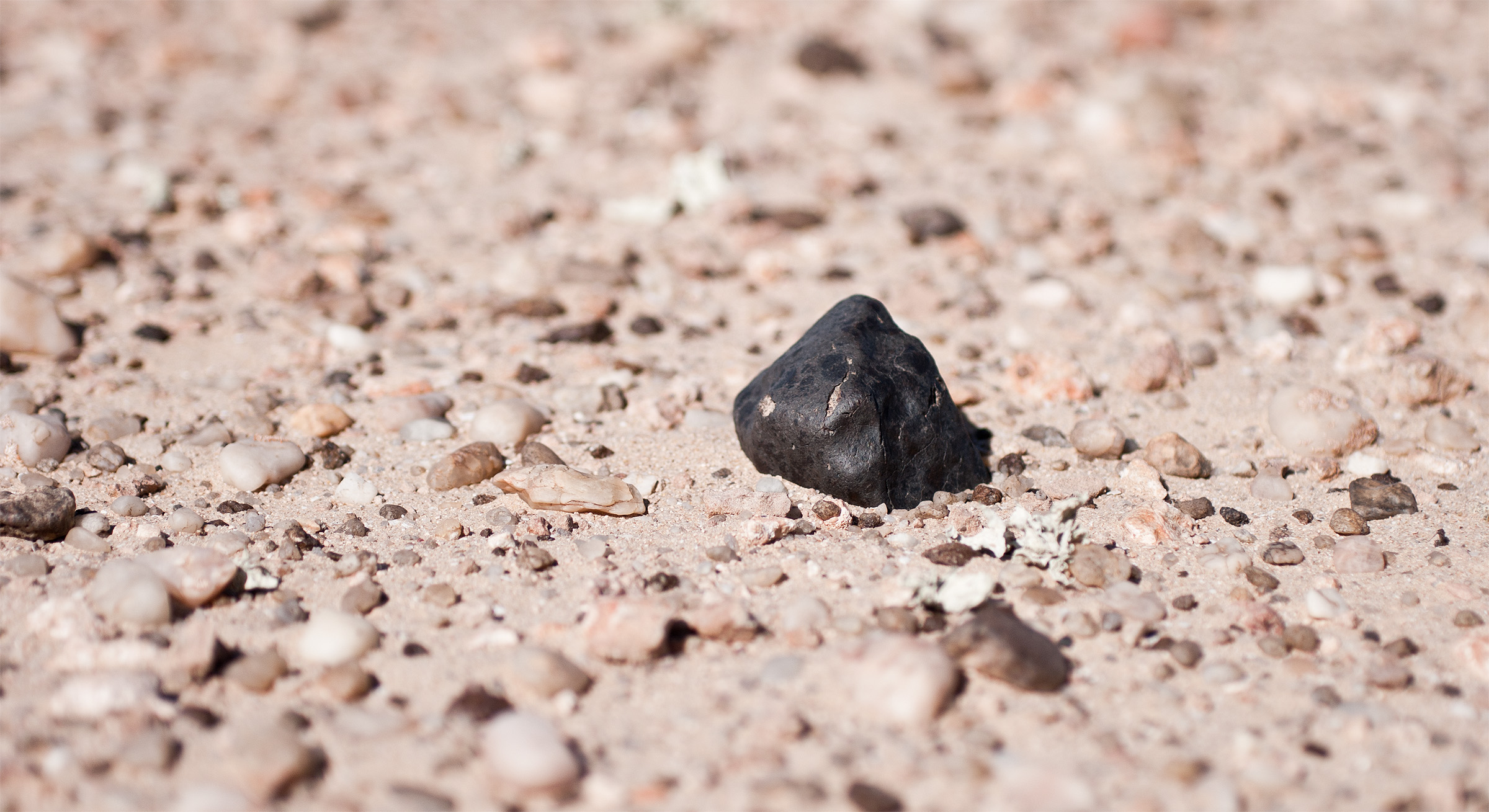
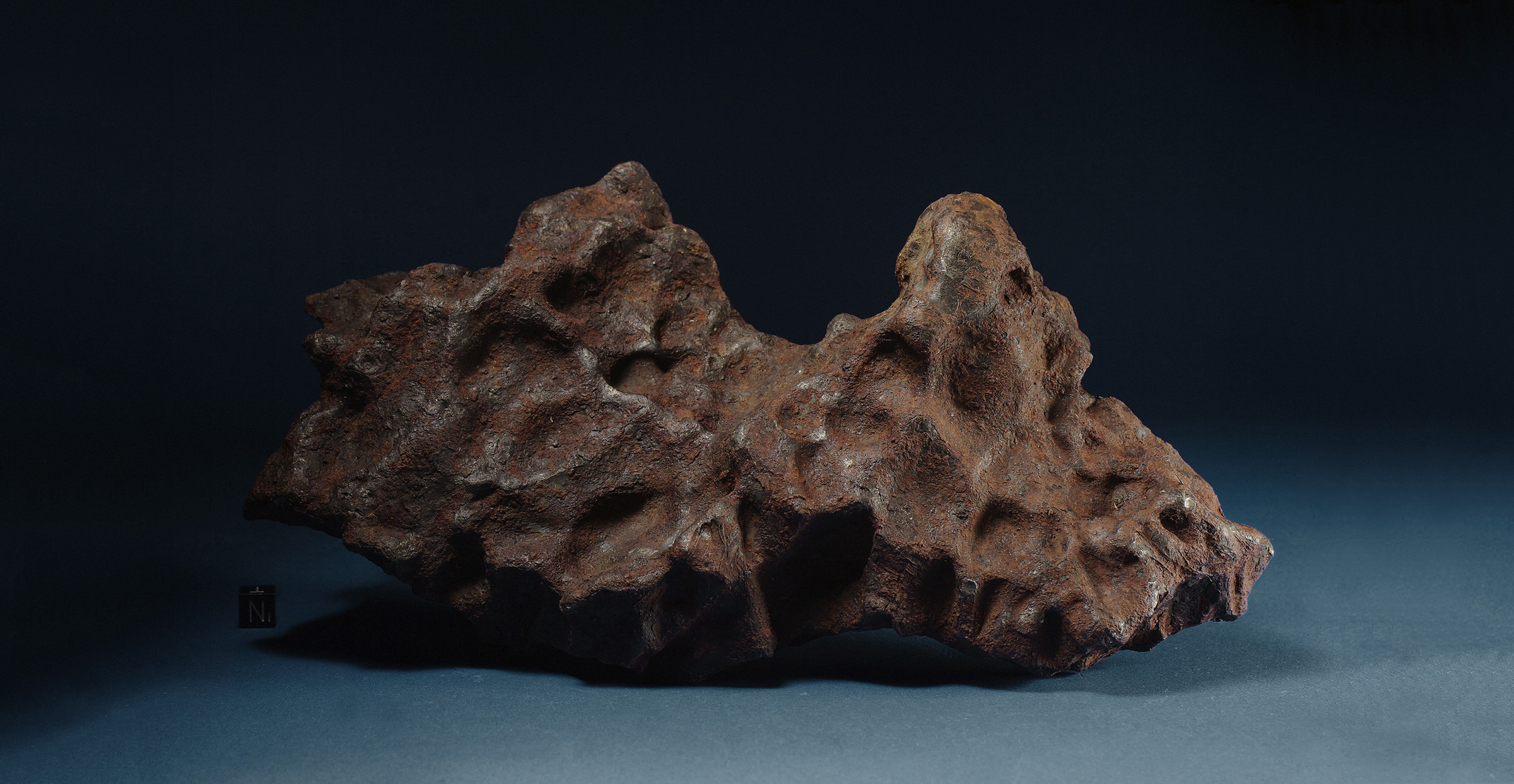
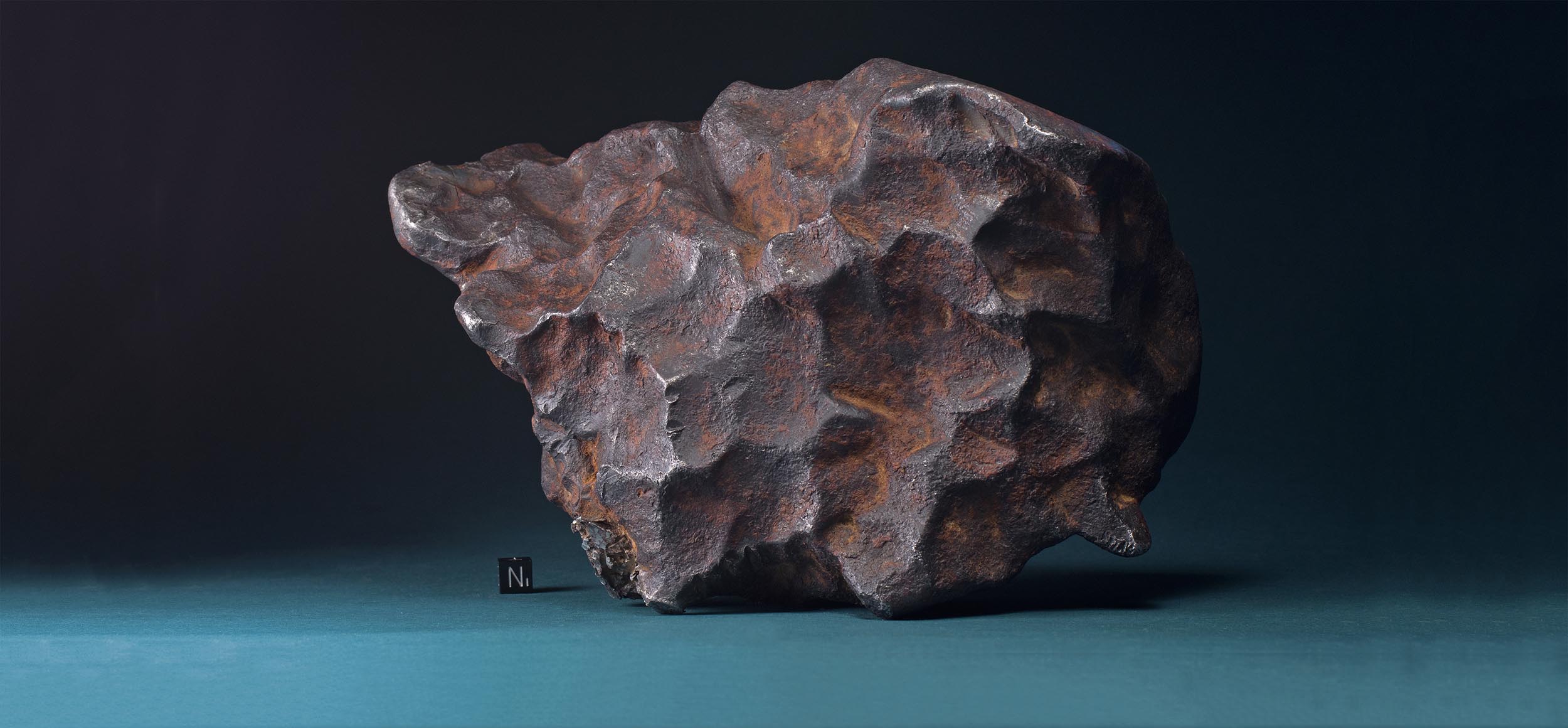
The 3165gm El Moichine mass after one half was cut off (bottom surface) and the front
was removed with a hammer by the finder. Still it shows the distinct red
streaks from impact on sandstone. Photo courtesy of Hanno Strufe
|
|
A single meteorite stone becomes a multiple fall
|

|
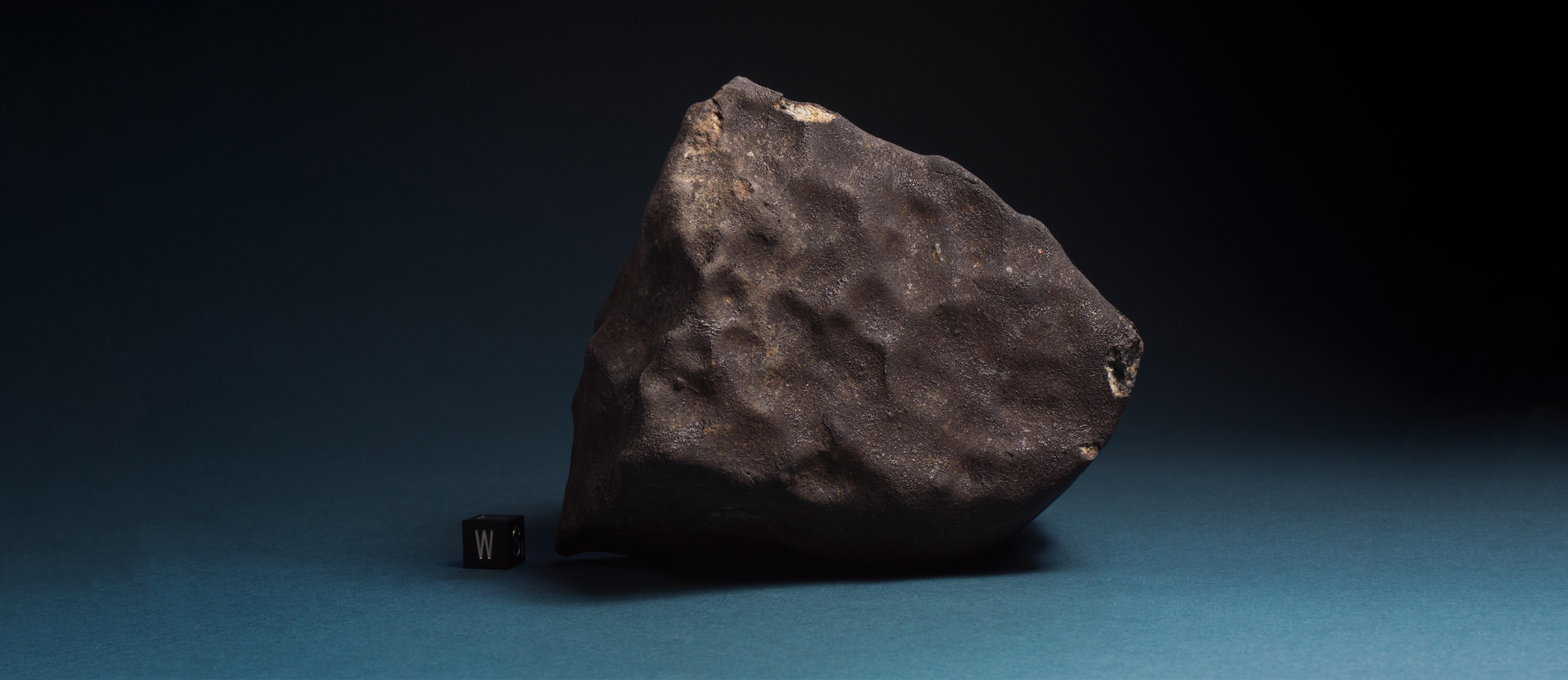
Detail of a 14.51gm slice cut from the El Moichine mass. Photo courtesy of Hanno Strufe
|
|
The first information on a new meteorite fall in Mauritania
came in the shape of a 3.165kg chunk of rock brought to
Europe by a young Mauritanian
college student. M. Ould Mounir was travelling back to Germany
after spending his semester break in his home country. In November
2006 and via electronic mail he offered the stone
and spread the news of the fall to a number of museums
and mineral dealers and collectors. Finally German
meteorite enthusiast Hanno Strufe recognized the
importance of the offer and decided to initiate
the classification procedure.
The meteorite was documented in photo, cut and
a sample was sent to Dr. Beda Hofmann of the University
of Bern in Switzerland, to determine whether the particularly
fresh appearing meteorite represented a recent fall. The analysis of
cosmogenic radionuclides indeed confirmed a very recent event.
Both the seller of the material and his cousin, the finder of this first
Bassikounou stone, Mr. Ould Mounir claimed that only a single
mass was found after a fireball was seen to land 11 km Southeast
of Bassikounou. Neither Hanno Strufe nor Dr. B. Hofmann from
the University of Bern had any reason to doubt this information.
The first draft of the submission text for the new meteorite
to the NomCom was based on this state of knowledge.
|

|
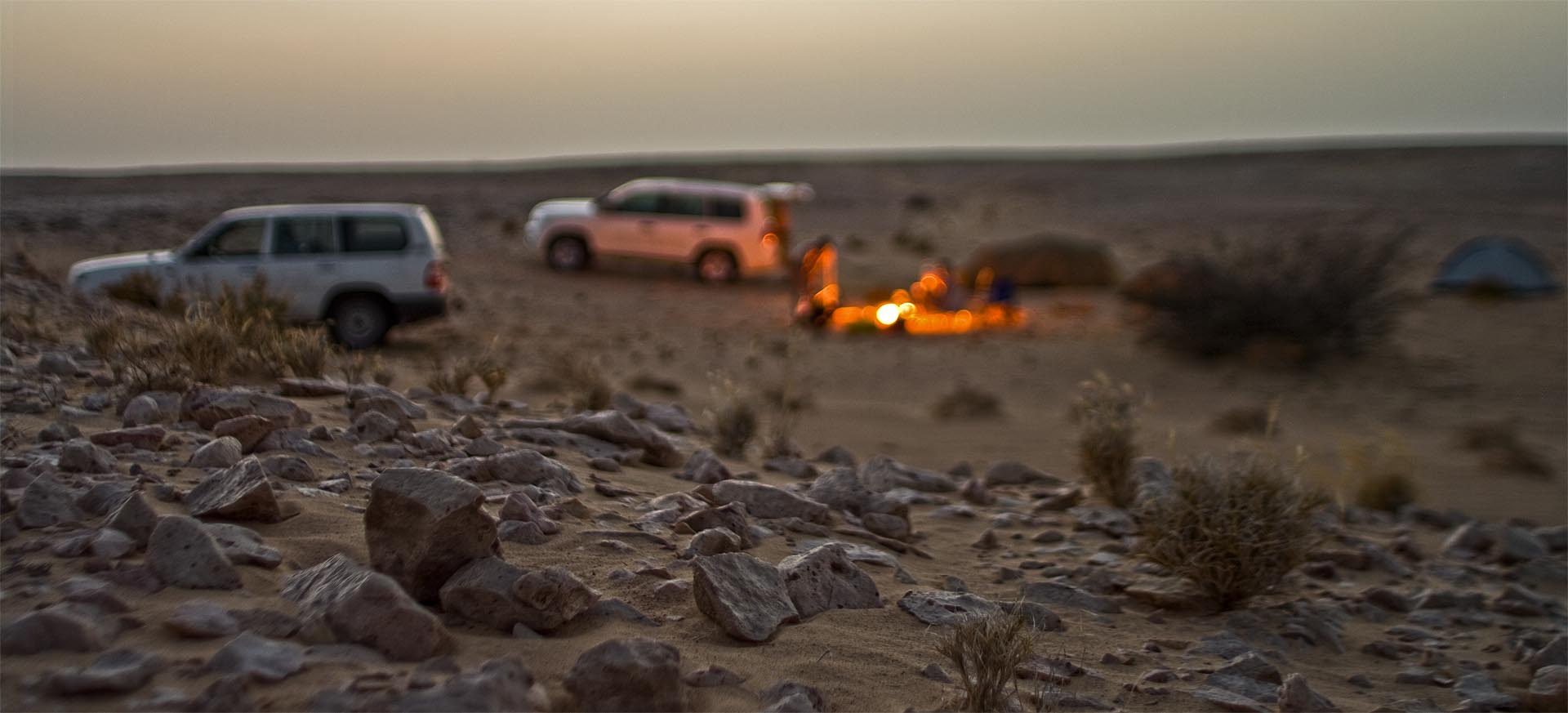
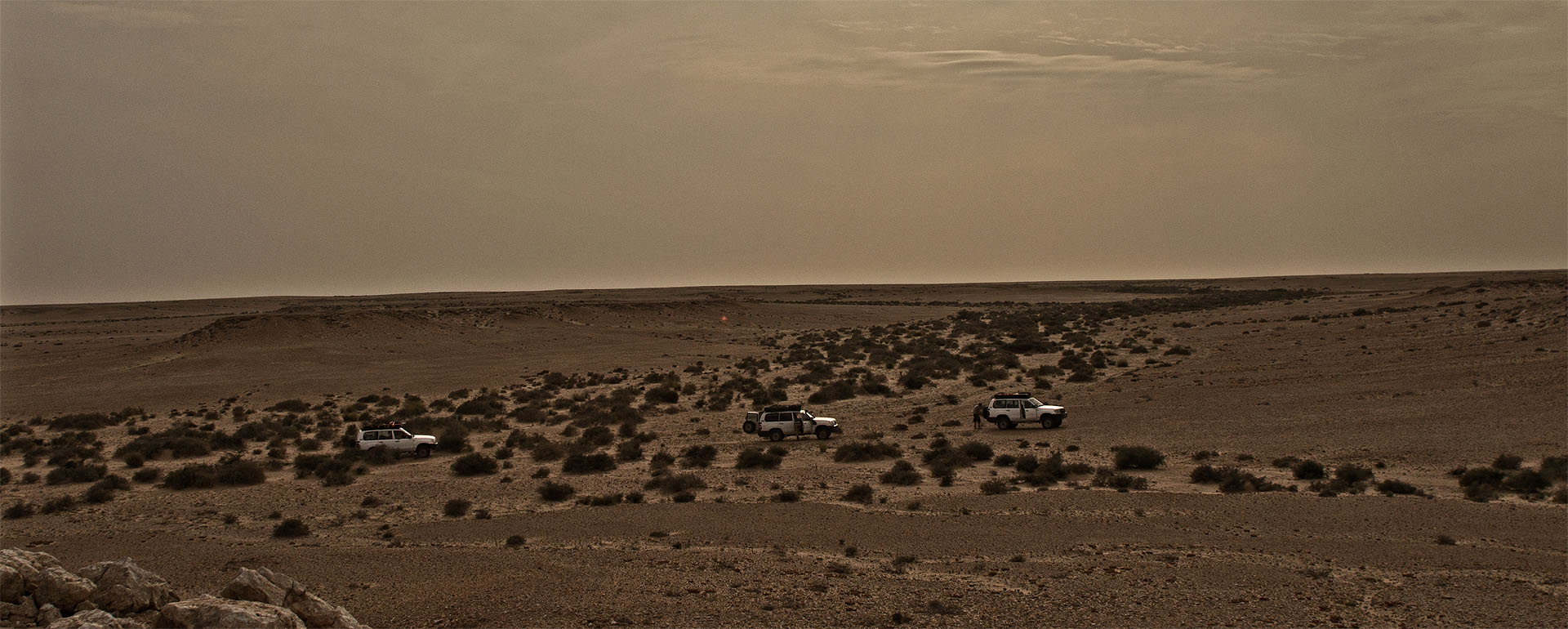
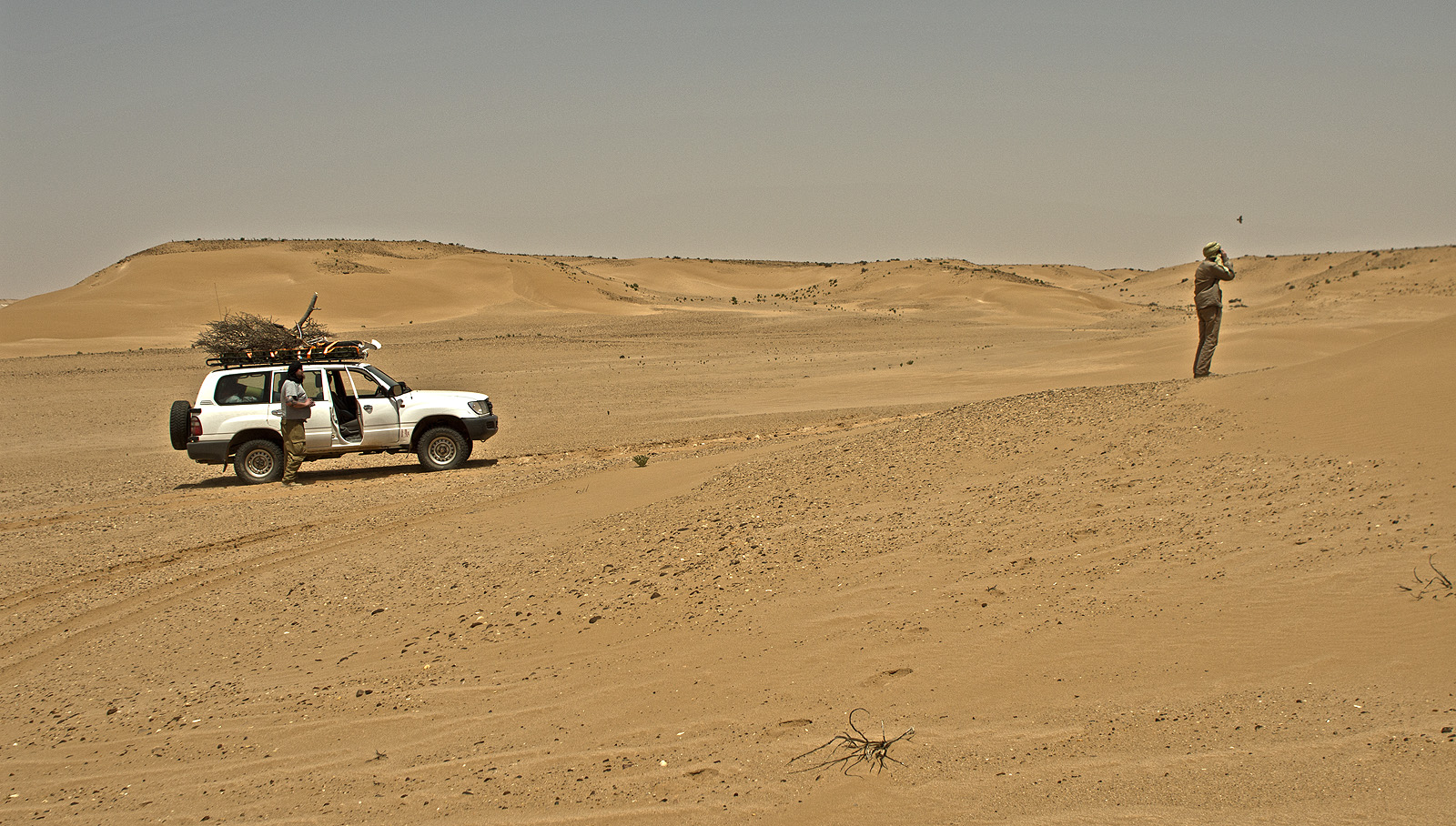
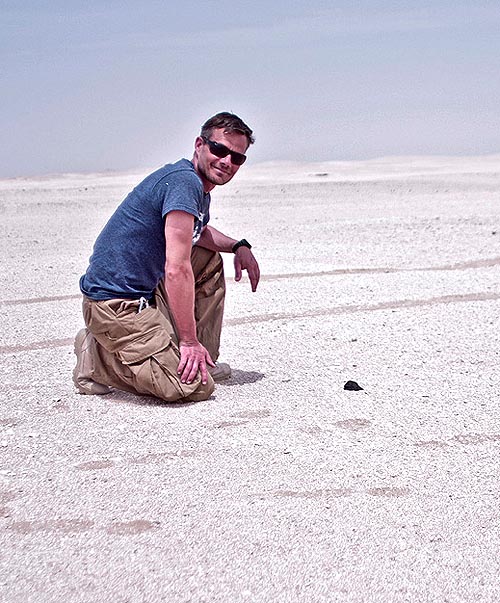
M. Zeroual visited the fall site in February 2007.
He is not only the most successful prospector of
the strewn field at present, but we also owe
him the only photos of the fall area. Photo courtesy of M. Zeroual |
|
By February 2007 a Nouakchott based entrepreneur and
tourist guide Mohamed Zeroual learned about the
Bassikounou event and decided to visit the fall
site. After reaching Bassikounou on the third day
of his 900 mile journey Zeroual soon met several eye
witnesses of the fall and was led to parts of the
strewn field. He spent the following ten days in the
area and managed to collect altogether 21 individuals
and fragments of the meteorite including the 6120gm main mass.
It took another full month until the knowledge
of this new batch collected at the strewn field
reached Europe. After forwarding the news to Dr.
Hofmann in order to change the datasheet going with the classification
results the authors decided to investigate further.
click to continue
go to page 1 | 2 |
3 |
4 |
5 |
Maps & Appendix
|

|