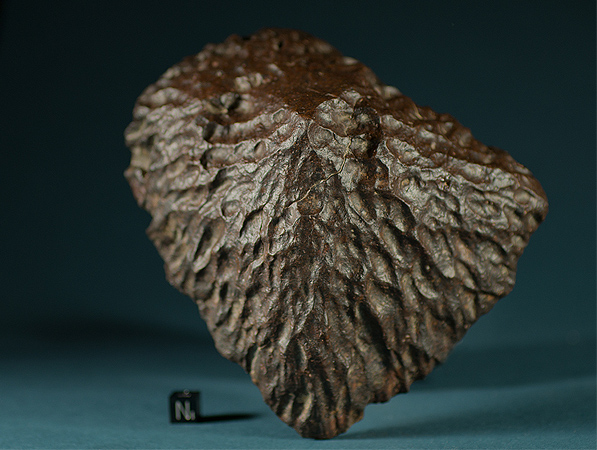
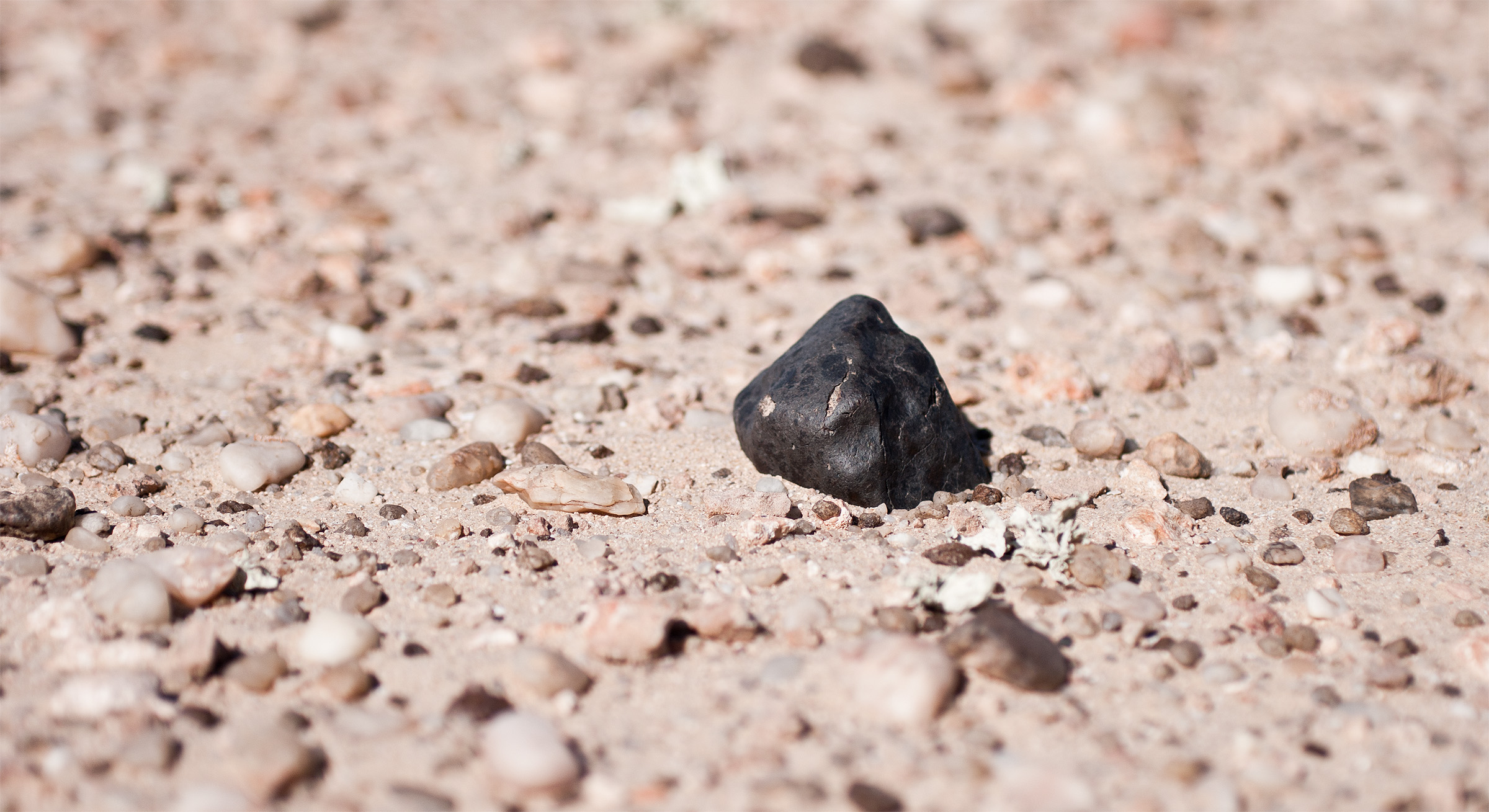


The main focus of the Buhl Meteorite Collection is on stone and iron meteorites with exceptional or particularly characteristic morphologies. In particular such specimens that exceedingly display the effects of atmospheric passage on shape and texture of the meteorite. In this regard we try to acquire meteorites recovered after witnessed falls with priority. Several Saharan finds with often well preserved exteriors are included as well as own finds from various hot deserts.
 

Exemplary painted inventory number
Another aim of the collection is to accumulate representative samples displaying the internal characteristics of petrologic and chemically different meteorites. Again here the focus is on exceptional features such has high contrast chondrule patterns, heavy brecciation, shock features or uncommon inclusions. Due to questions of conservation and weathering the latter section of the collection is mostly limited to stones.

The collection is managed via a database that lists the general specs of locations represented as well as photos and individual features of a respective specimen. Each specimen is stored with its inventory card printed in UV-resistant colors on heavy duty acid free cardboard.
 

Exemplary specimen card, original size
The inventory cards provide key specs of the location and the respective specimen as well as its inventory number. Each specimen also has its inventory number painted in black letters on white surface. Thus a mix up of specimens, a common thread in many collections, is ruled out, even if the specimen is separated from its inventory label.

We decided to present a representative cross section of our collection to the interested public via this website. This section contains special showpieces of the collection and will be frequently updated. The inventory is displayed in chronologic order with the latest acquisitions listed first. The missing gaps in between inventory numbers are caused by reference samples of meteorites not listed in the display section.

Inventory numbers marked with an asterisk " * " have either been donated, traded or sold and are no longer represented in the collection. The scale cube pictured is 1 cm each side.

Inventory

Inventory # B-0392

Henbury
Iron, Octahedrite, IIIAB
Northern Territory, Central Australia
Find: 1931 (Alderman)
TKW: > 2 MT
Individual: 1.740 kg

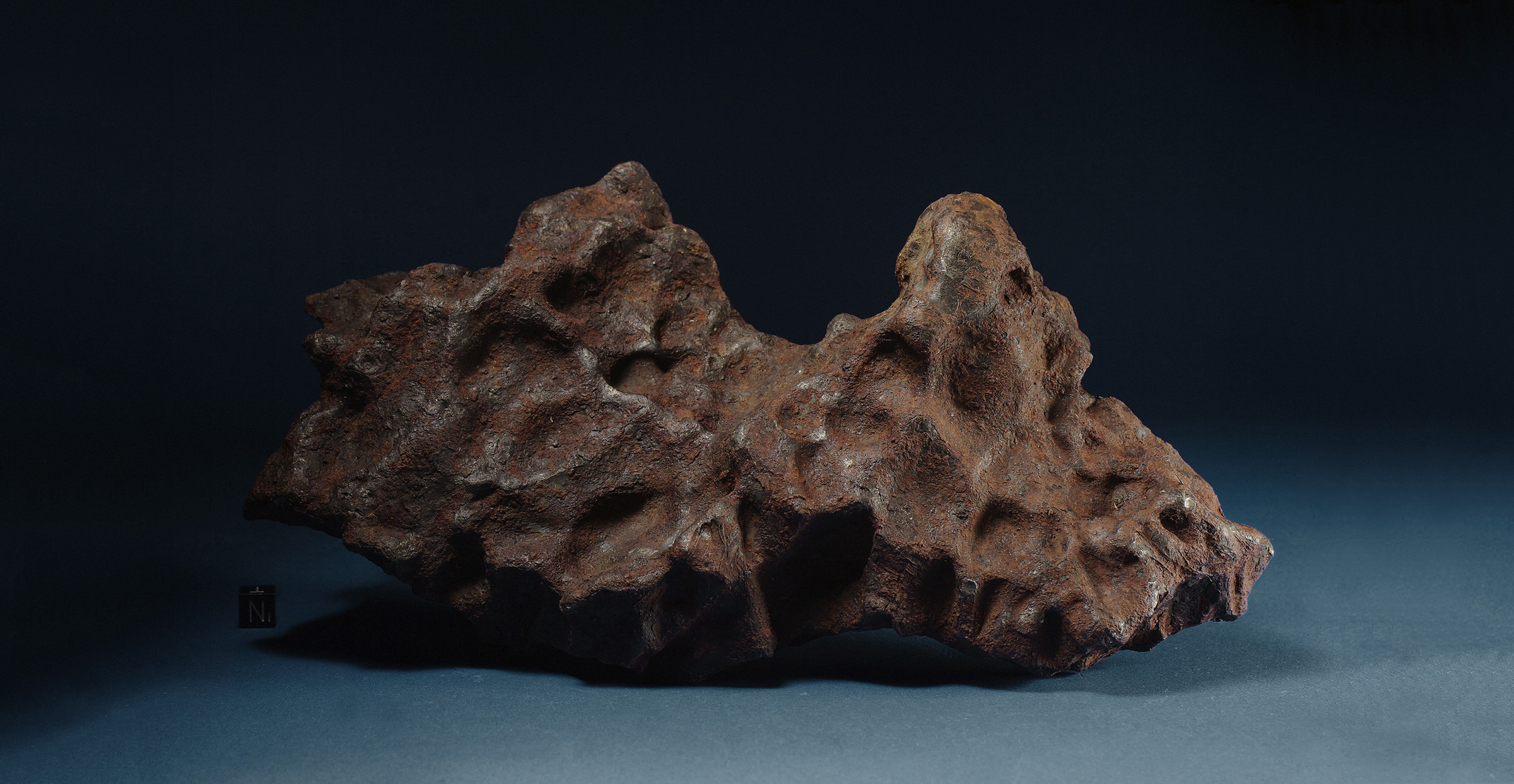
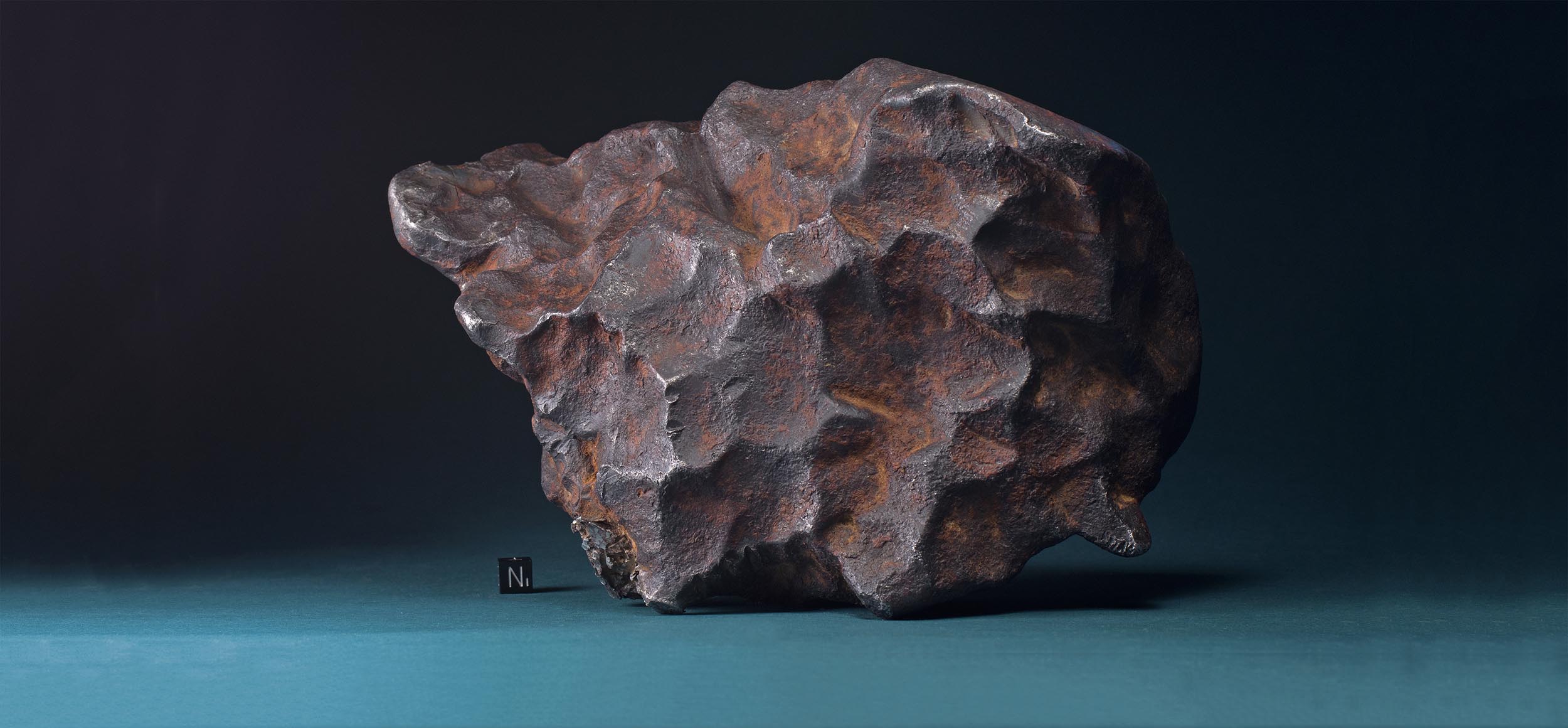
Heavily sculpted 1.7 kg individual of the Henbury iron meteorite. Like # 383 this specimen was found by Don MColl, former curator of Queensland museum, in the 1970s. Its find location is approx. two miles north-east of the craters. The iron shows deep regmaglypts exxagerated by soil etching. On this specimen the selective erosion has shaped the ridges between the regmaglypts into knife-sharp thorn-shaped edges.

Inventory # B-0390

Sikhote Alin
Sikhote Alin Mountains, Primorsky kray, Russia
Fall: February 12, 1947
TKW: > 20 MT
Individual: 3,600 g

Omega-shaped individual with distinct ablation features and pronounced regmaglypts. The iron meteorite is in uncleaned find condition. Fusion crust is preserved on 80 percent of the meteorite's surface and shows numerous flowlines, splash marks and melt rims. Shikote Alin meteorite individuals in uncleaned find condition are particularly rare.

Inventory # B-0389*

Sikhote Alin
Sikhote Alin Mountains, Primorsky kray, Russia
Fall: February 12, 1947
TKW: > 20 MT
Individual: 615g

Regmaglypted individual in uncleaned find condition. The original fusion crust is preserved on two thirds of the meteorite's surface and shows numerous flowlines, splash marks and melt rims.

Inventory # B-0386

NWA 7176
Stone, chondrite, L3,S1,W2/3
Saguia al Hamra
Find: Nov. 2, 2010
TKW: 160.1 g
Individual: 118.8 g

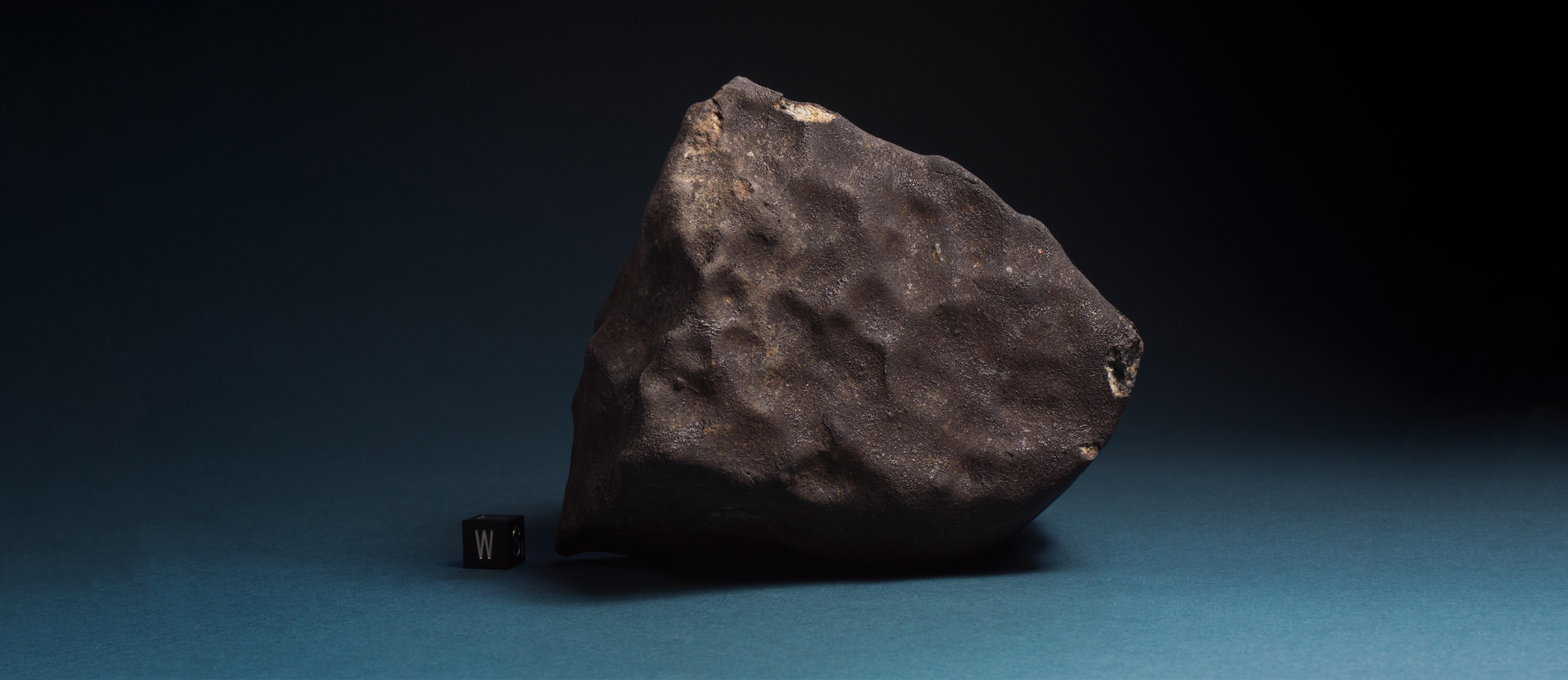
Uneqilibrated chondrite found in the Mauritanian part of Western Sahara. While the interior shows only moderate oxidation the exterior of the meteorite is heavily sandblasted and coated with an old desert patina. The matrix shows a dense array of chondrules of various types as well as a high ammount of NiFe in large aggregates. We will report here on the final classification results.

Inventory # B-0385

NWA (classification pending)
Stone, achondrite, eucrite, AEUC
Morocco, Hammada du Fadmah
Find: 2010
TKW: 51.8 g
Individual: 51.8 g

Fresh achondrite individual found by herdsmen in the Hammada du Fadmah, Morocco. The specimen is arguably fresh with a matte glossy fusion crust intersected by contraction cracks. The fine grained interior is that of a typical monomict eucrite. We will report here on the final classification once the analysis is completed.

Inventory # B-0384

NWA 6471
Stone, achondrite, ureilite, AUR
Morocco (Western Sahara)
Find: 2010
TKW: 603 g
Endcut: 151 g

NWA 6471 was purchased in Morocco (Western Sahara) in October 2010 and subsequently classified by Dr. A. J. Irving. NWA 6471 is a coarse grained aggregate of olivine (exhibiting characteristic reduced, metal-bearing rims) and orthopyroxene. The sample has two polished cut surfaces at right angles to each other, the reverse side shows the original surface and is coated with well preserved fusion crust.

Inventory # B-0383

Henbury
Iron, Octahedrite, IIIAB
Northern Territory, Central Australia
Find: 1931 (Alderman)
TKW: > 2 MT
Individual: 11 kg

Scupted 11 kg individual, found in the 1970ies 2 miles northeast of the craters by Don McColl, former curator of Queensland museum. The meteorite is sheaped like a twisted bullet and shows deep regmaglypts which are only moderately eroded by soil etching. In order to preserve its natural appearance the iron was left uncleaned, and thus still displays the typical laterite red patina of meteorites recovered from the Henbury crater field.

Inventory # B-0382

Bassikounou
Stone, chondrite, H5, S2, W0
Bassikounou, Hodh Ech Chargui, Mauretania
Fall: Oktober 16, 2006, 04:00 hrs
TKW: > 93 kg
Individual: 581 g

Smoothly ablated and wedge-shaped individual with fresh fusion crust coating 95 percent of the specimen. One small patch, where the initial fusion crust spalled off, shows minor surface ablation and a thin coating of secondary crust. One surface displays flow lines. Although this meteorite was found considerable time after the fall it shows little to zero weathering.


  © 2001-2011 MeteoriteRecon