

|
|
|
www.niger-meteorite-recon.de
Santa Vitoria do Palmar meteorite

The first discoveries in March 2003
Six years after the spectacular event no one in the
village of Santa Vitoria do Palmar was still thinking about
the fireball of June 1997. Roberto Maciel also had different
things in mind as he was walking at the foot
of the Holocene sand dunes at the edge of the Mirim Lagoon where he
was prospecting for Indian arrow heads.
But on March 25 or 26 Maciel
made a discovery that reminded him of the fireball
that he had witnessed six years prior. Through the surface of the otherwise
boulder free marine sediments protruded a large dark stone which he immediately
dug out. The remarkable black rock seemed rusty on some parts and
displayed a number of distinct depressions shaped like fingerprints.
|

|
Picture 5. The approximate spot of the 1st find located at the bank of the Mirim Lagoon.
Picture was taken viewing from north to south, water in the back.
Photo courtesy of Jose Monzon Pereia.
|
|
Roberto Maciel was convinced that the 34 kg rock he
had just discovered wass a meteorite. To him the piece
of rock could only have been deposited there by the 1997 fireball.
Maciel continued his search the following days and weeks,
now with the goal of finding more meteorites instead of
arrowheads. And his efforts were rewarded with success.
He found two more masses, 4340 gm and 1570 gm respectively.
|

|
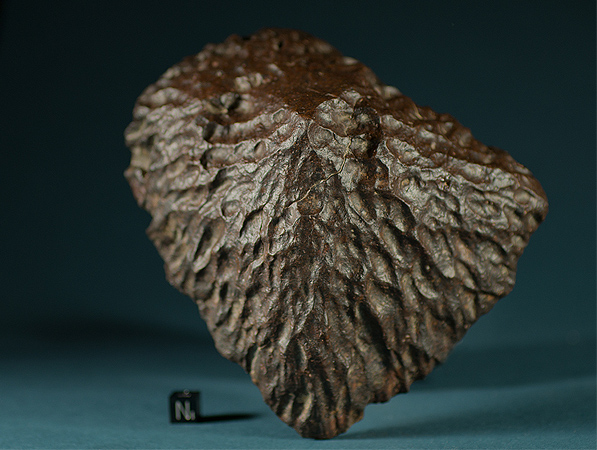
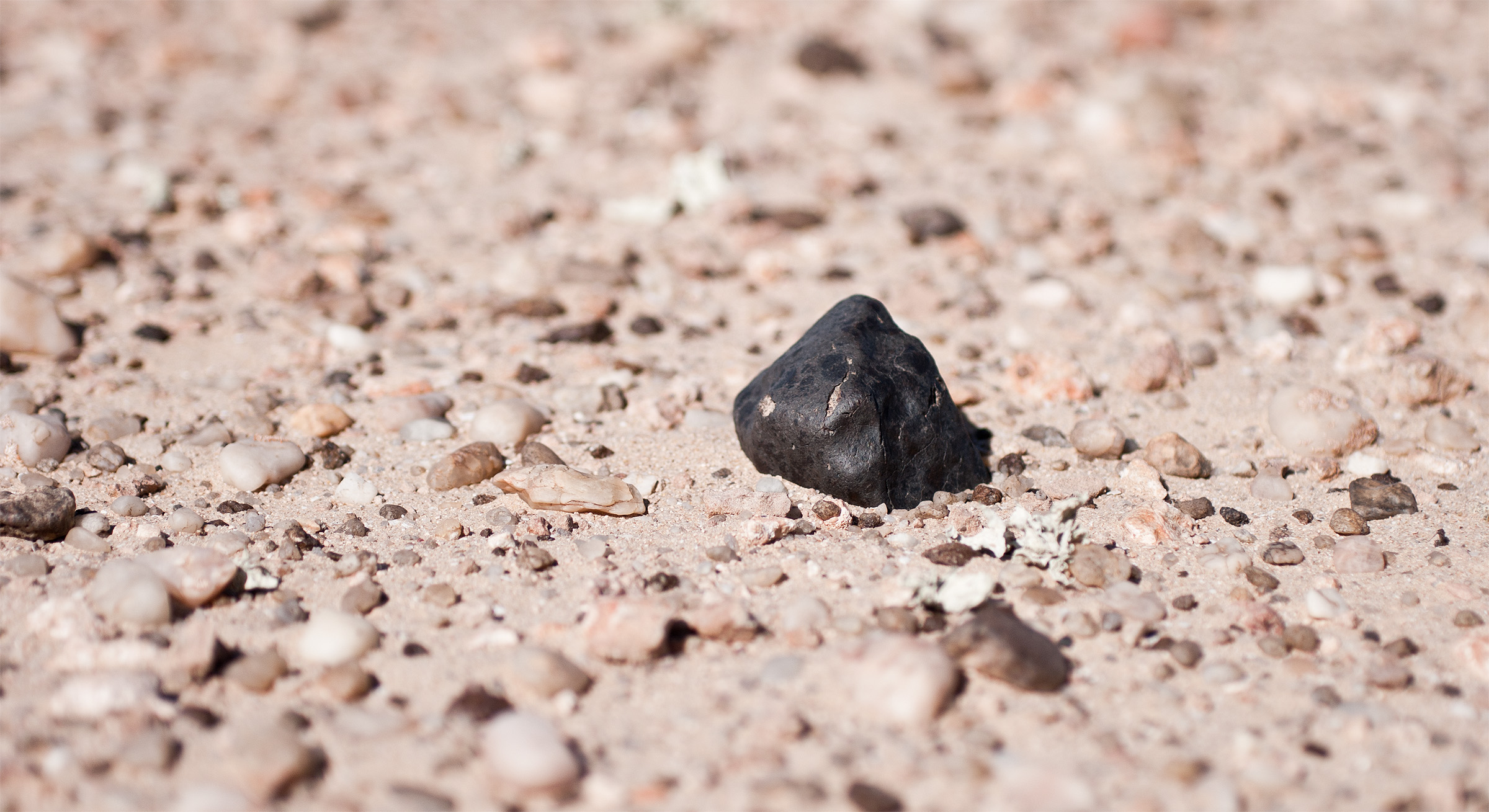
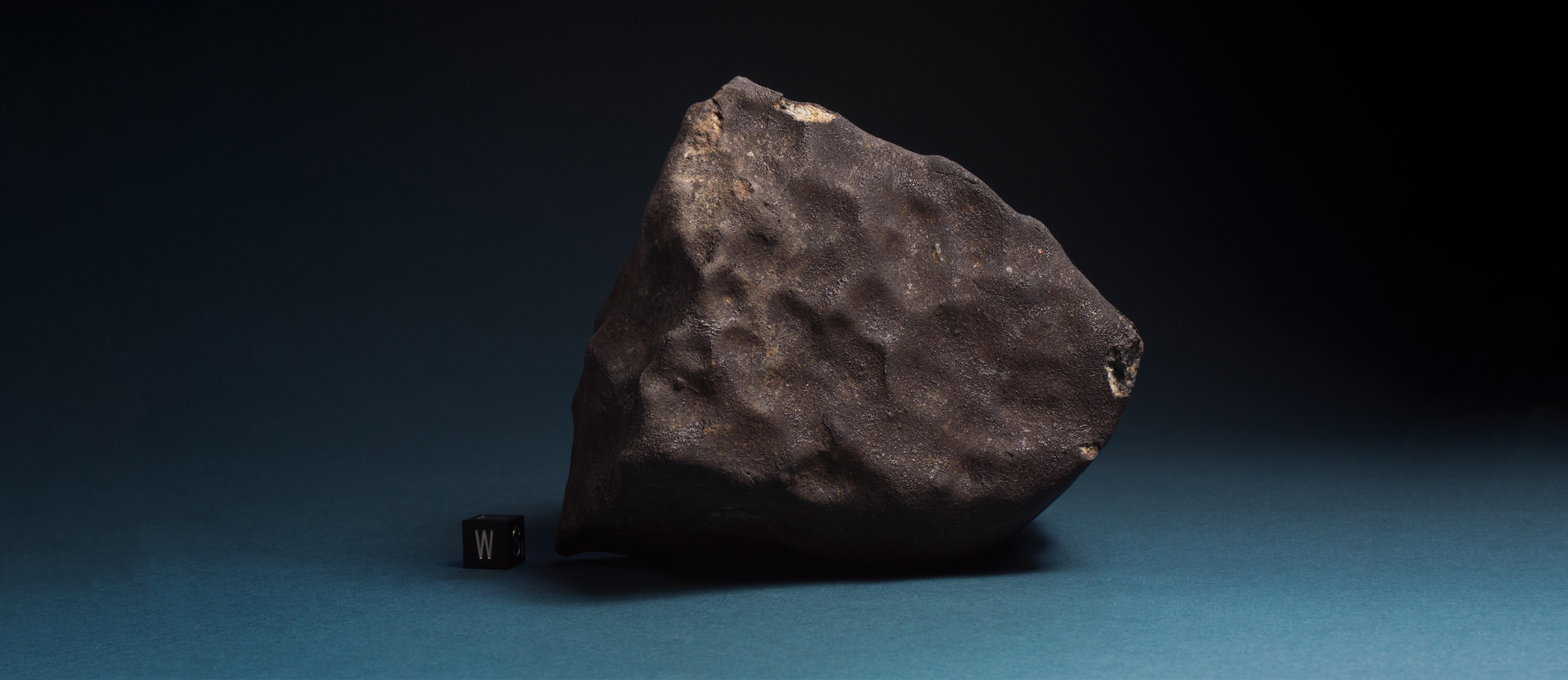
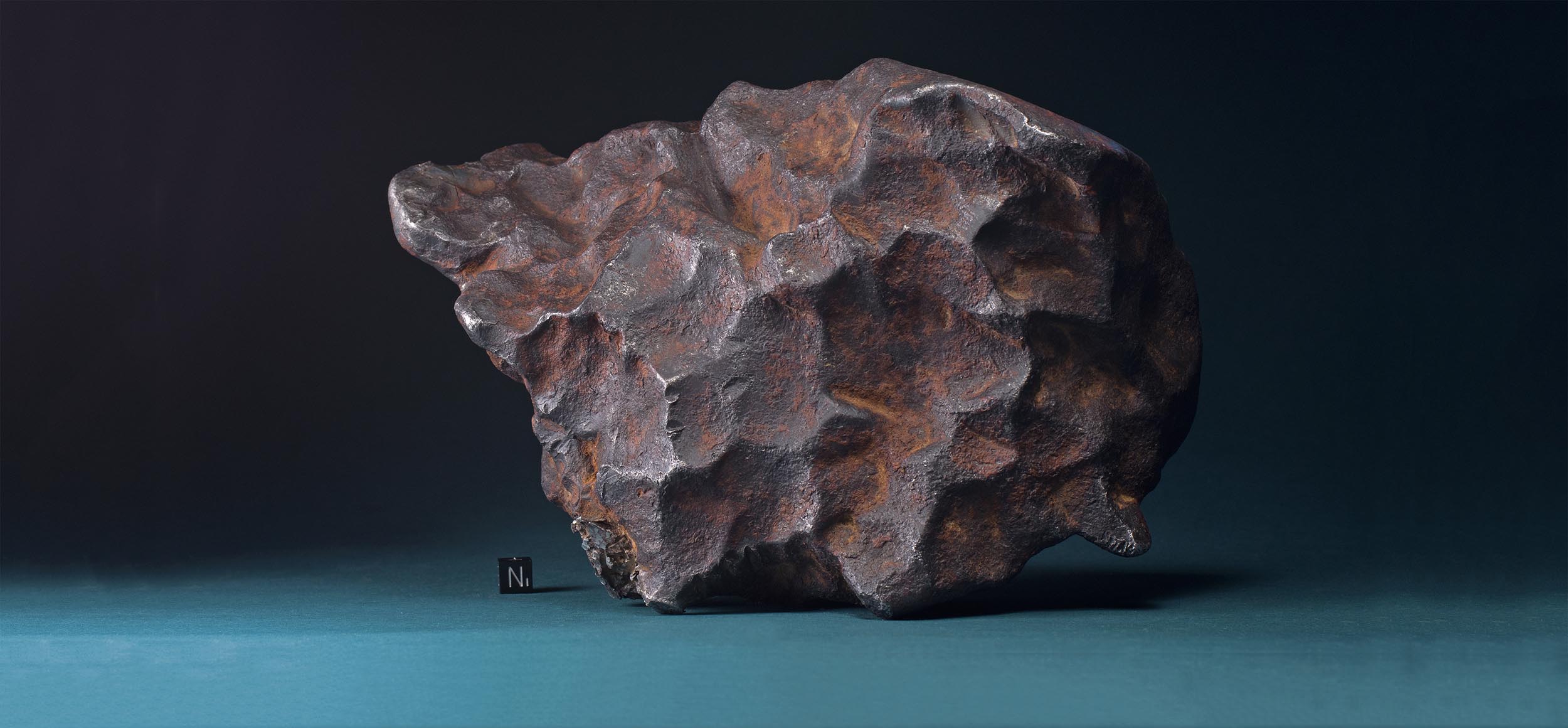
Picture 6. The 4.3 kg mass found by Maciel today is exhibited in the Museo Municipal
Tancredo F. in Santa Vitoria do Palmar. This indivual is generally fresher in appearence than the later finds.
The scalebar in the foreground is 4 cm.
Image courtesy of Jose Monzon Pereia.
|
|
At first the news of Maciel’s discoveries did not arouse
much interest in the rural community. But then the word reached
Josemaria Monzon Pereira, the curator of the local Museum,
he was instantly thrilled. Pereira immediately grabbed the phone
and contacted Maciel, a meeting was soon scheduled. And
Pereia did not only succeed in acquiring the two smaller masses
for the Museo Municipal Cel. Tancredo F. de Mello Brazil, he also
conducted the first documentation of the find location and circumstances.
It is because of Pereia that both masses are preserved intact until
now. Together with a small selection of other South American
meteorites they are accessible to the public in the exhibition
of the Museo Municipal Tancredo F. in Santa Vitoria do Palmar.
|

|
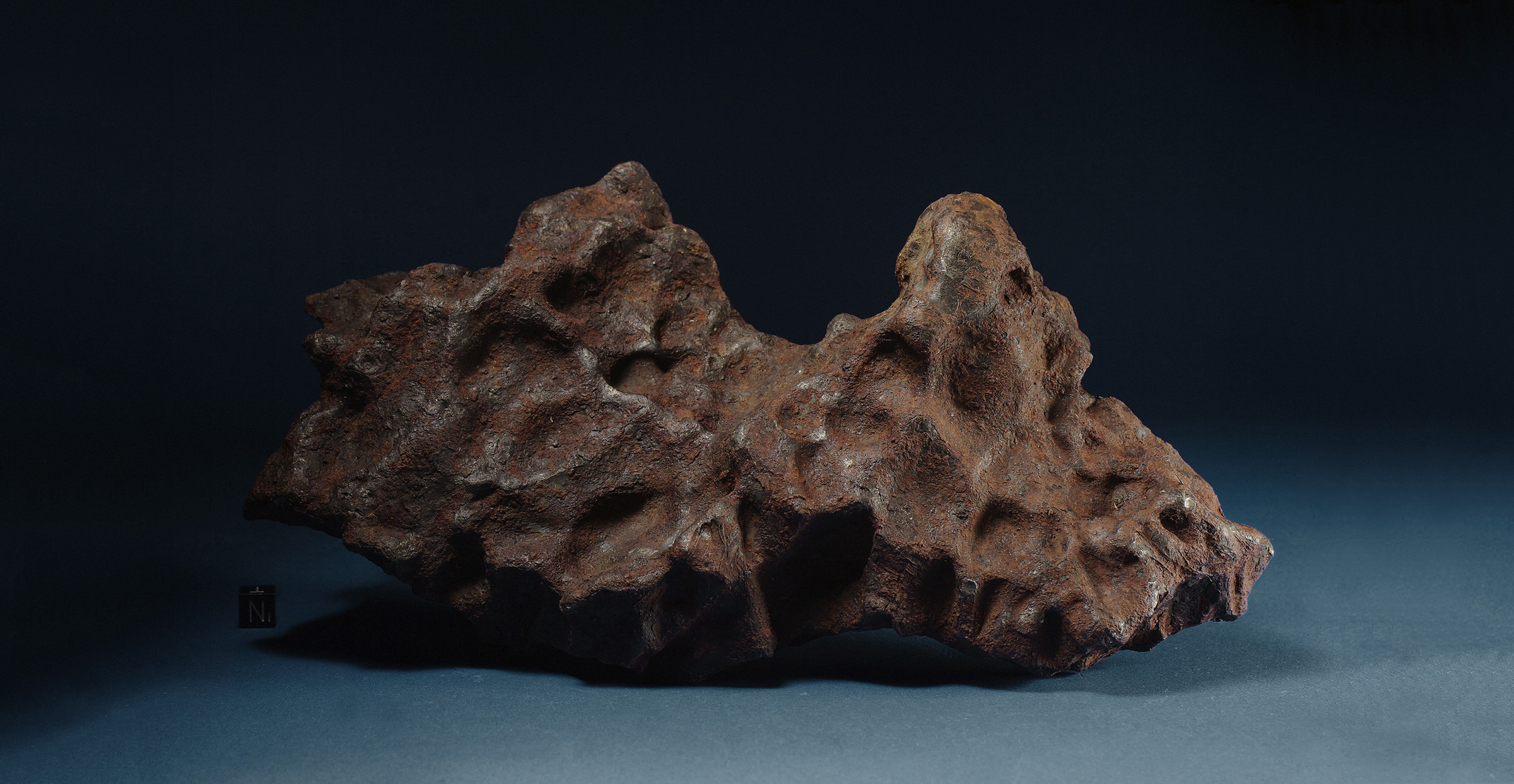
Picture 7. Although the 10.45 kg mass apparently
suffered heavily from weathering, fusion crust and remnants of flow pattern can still be found
on more protected areas such as on the bottom of these regmaglypts. Photo courtesy of Meteorite Recon
|
|
The fate of the remaining 34 kg mass today is
uncertain. The author’s investigation backed
up by local support could not identify the present
whereabouts. The finder himself has meanwhile passed
away. His son, Francisco Maciel, was able to give the
following report regarding the fate of what could probably
be the main mass of the Santa Vitoria do Palmar meteorite:
“One Sunday morning my Father took the stone with him to a get
together with other locals. He went off to a nearby fazenda and
returned without the stone. He explained to my family that he had given
the stone to an old geologist from the University of Rio Grande
del Sul in order to study the meteorite. I do not remember the name of this
scientist. I know that the stone weighed 34 kg and that it had the same texture
and appearance than the two smaller stones which he gave to the Museum. With the one
exception that the larger stone was more black on some parts than the others.“
said Francisco Maciel.
Pereia’s inquiries to identify the current possessor
of the stone at the University of Rio Grande del Sul
and among the relatives and friends of the finder which
he continued for more then two years lead to no further
clues. The 34 kg mass must be considered as lost pending
further notice.
Discovery of the 10 kg Mass in 2004
Among those, who had learned of and had had the chance to investigate Roberto
Maciel’s finds in August 2003 was Lautaro Correia,
a local rockhound and fossil expert from Santa Vitoria
do Palmar.
|

|
Picture 8. Approximate find locations of Maciel masses (1) and Correia mass(2).
Lower map shows mass distribution. Image courtesy of Meteorite Recon
|
|
As a passionate aficionado of the local fossil
deposits Correia was familiar with the find zone which
is famous for its marine sediments. From then on Senór Correia
made more frequent field trips to the strands of the Mirim Lagoon.
On February 14. 2004 he was again prospecting the fossil deposits
within sight of the Mirim Lagoon. Close to a huge
fossil whalebone he spotted a dark rock two thirds embedded in
the sandy soil.
After uncovering the regmaglypted rock he recognised
its close similarity to the material found by Maciel the previous
year. The find position is not far from the site of the Maciel
finds which is given as 33°30’56’’ S, 53°24’65’’ W. A joint survey
with Senór Pereia did not yield further finds.
On December 24. 2005, under the headline „Meteorito
Santa Vitoria do Palmar“ the „Jornal Libarai Chui“
published a report on the meteorite issue with particular
focus on the finds and their exhibition in the local museum.
Click to continue
Part 1, "The 1997 fireball" | Part 2, "First finds" |
Part 3, "Analysis" |
Part 4, "Map"
|

|