

|
|
|
www.niger-meteorite-recon.de
Niger 2002 - illustrated report
go to page: 1 | 2 | 3 | 4 | 5 | 6 | 7 | Team | Area Map
|


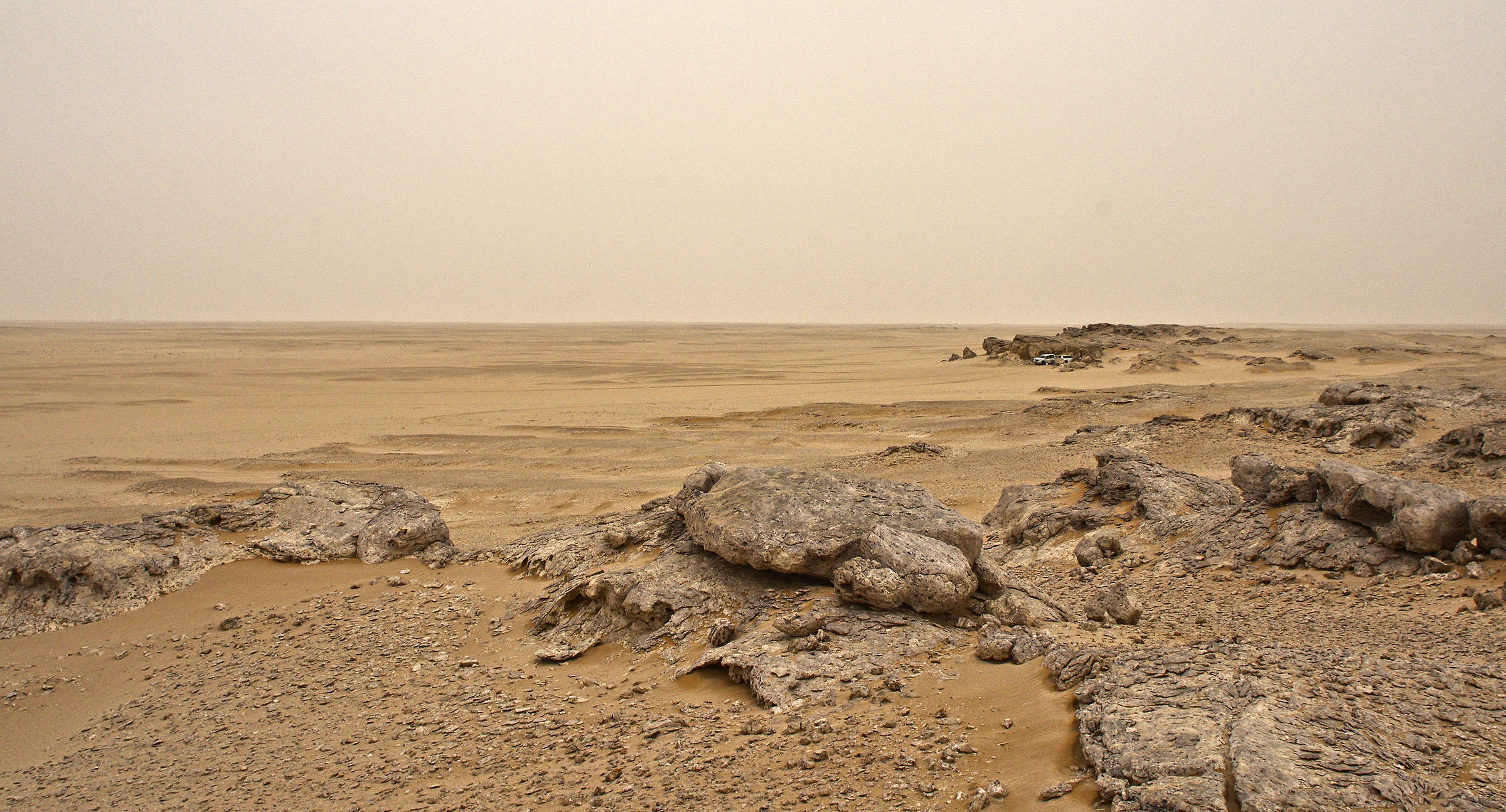
Grave mounts of the ancient Garamants in the eastern Tamesna. The completely unexplored burial ground is situated close to the ancient caravane route leading from Timbouktu to the trade centers at the North African coast.
Today of course the place is far off from any frequented piste.
|
|
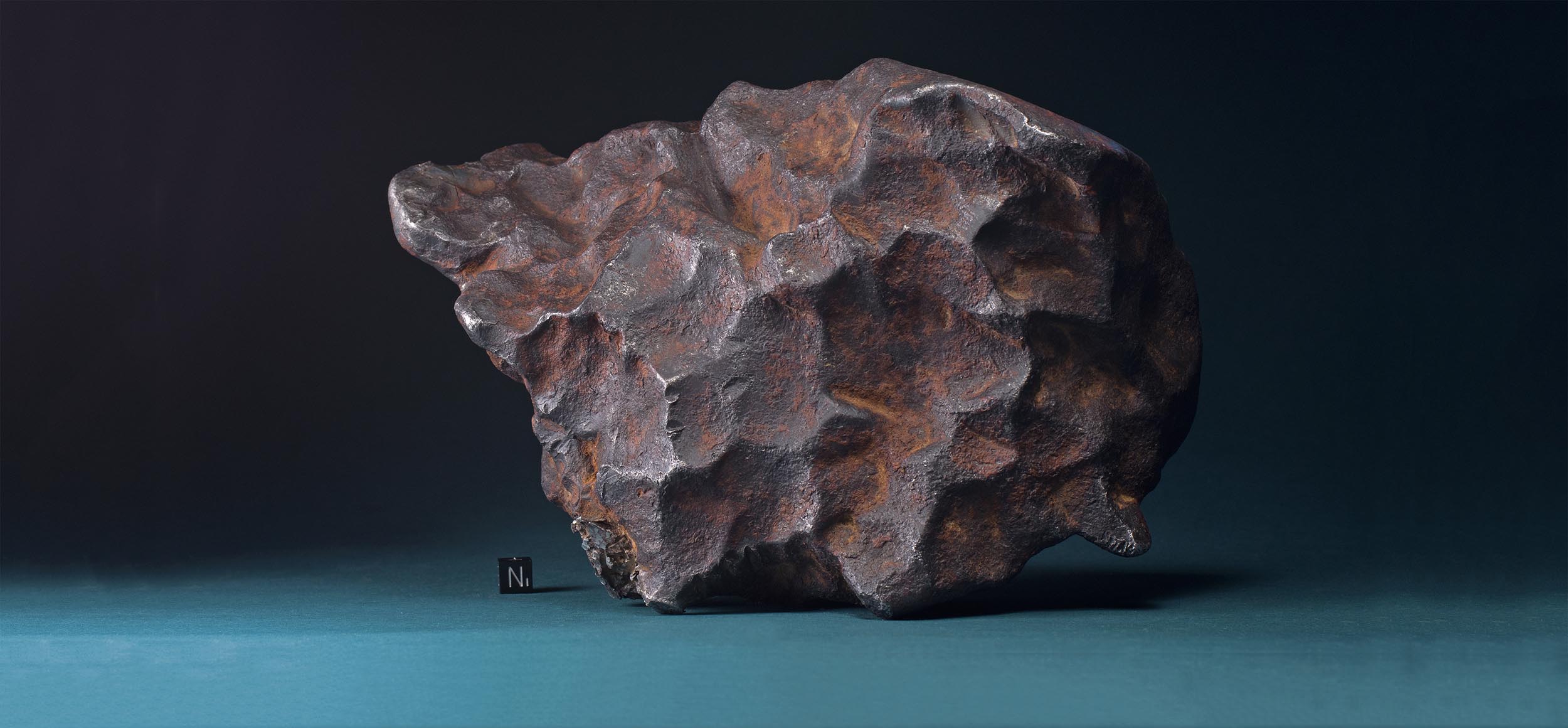
Even for our desolate search area such a wittnessed fall is reported. At the afternoon on August 21st in 1997 a fireball followed by a huge smoke trail and accompanied by a series of explosions terrified a seven year old Tuareg boy. He was tracking an estray goat in the ravines of Mt. Tazerzait and found the impact pitch of the rock the following day. A sample of the strange rock that fell out of the sky was later reported to scientists in Niamey and turned out as an ordinary chondrite, the most common type of meteorite. Thorough research at the impact site revealed a further 110 kilos of material but the original mass was supposed to have been considerably larger.
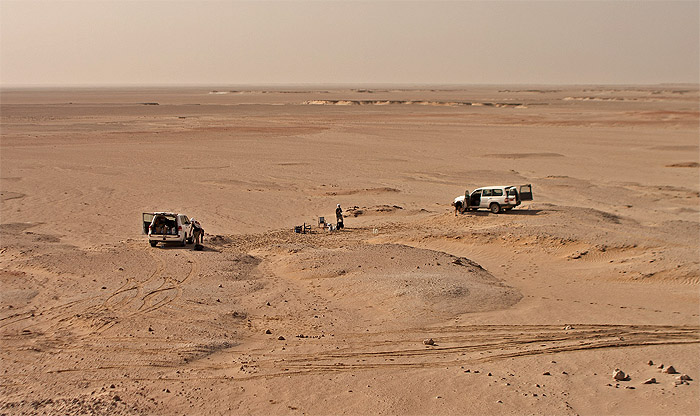
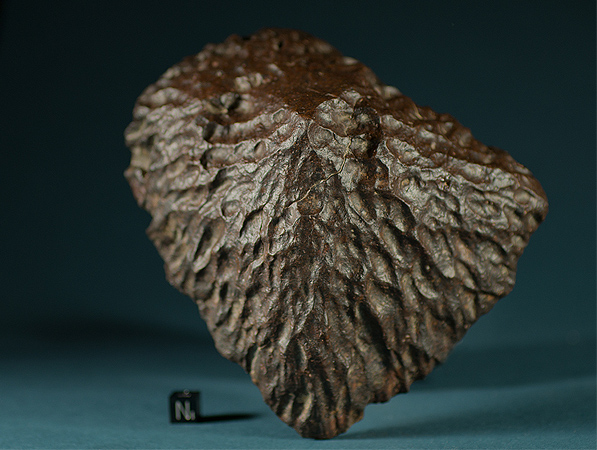
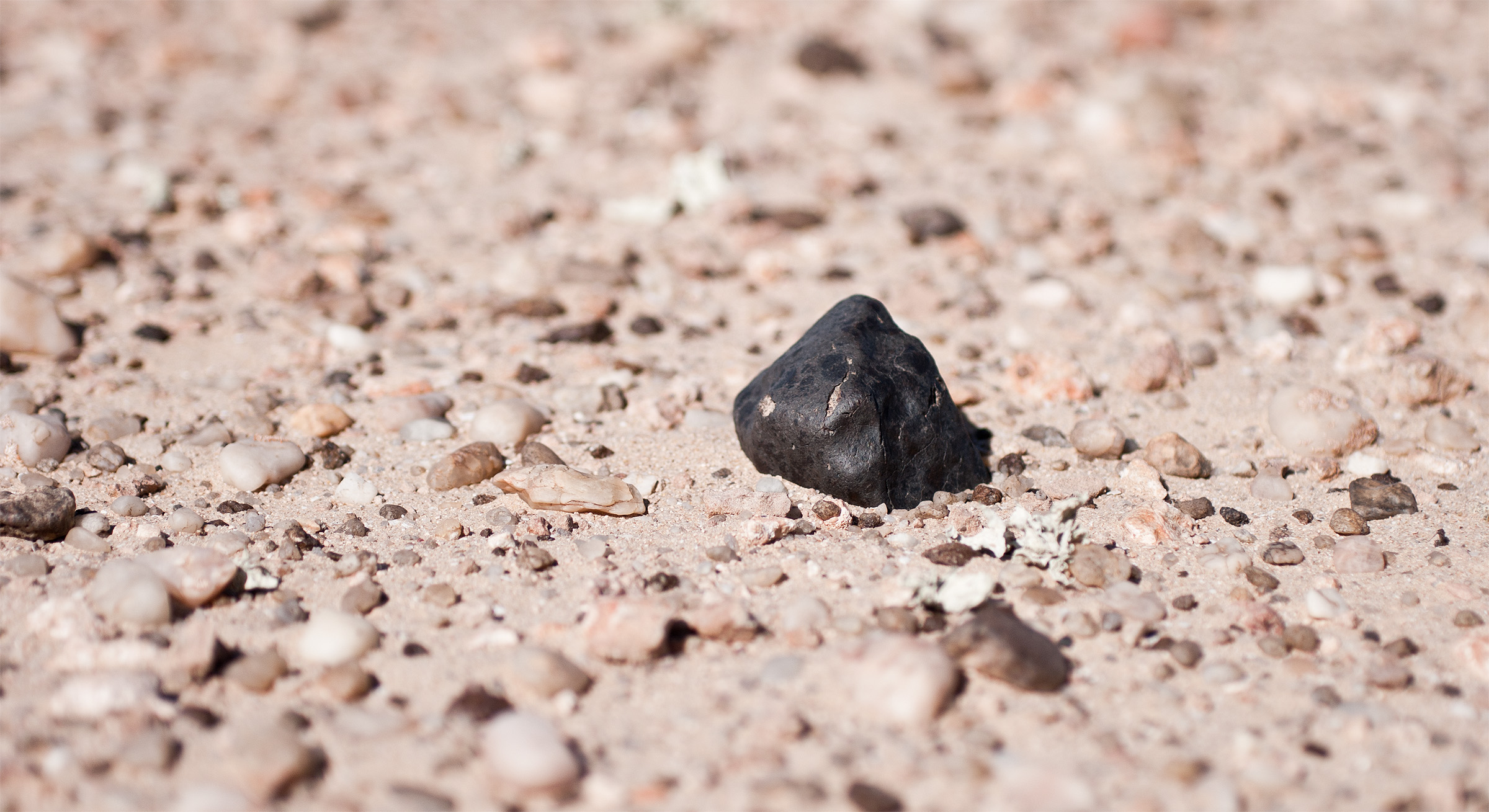
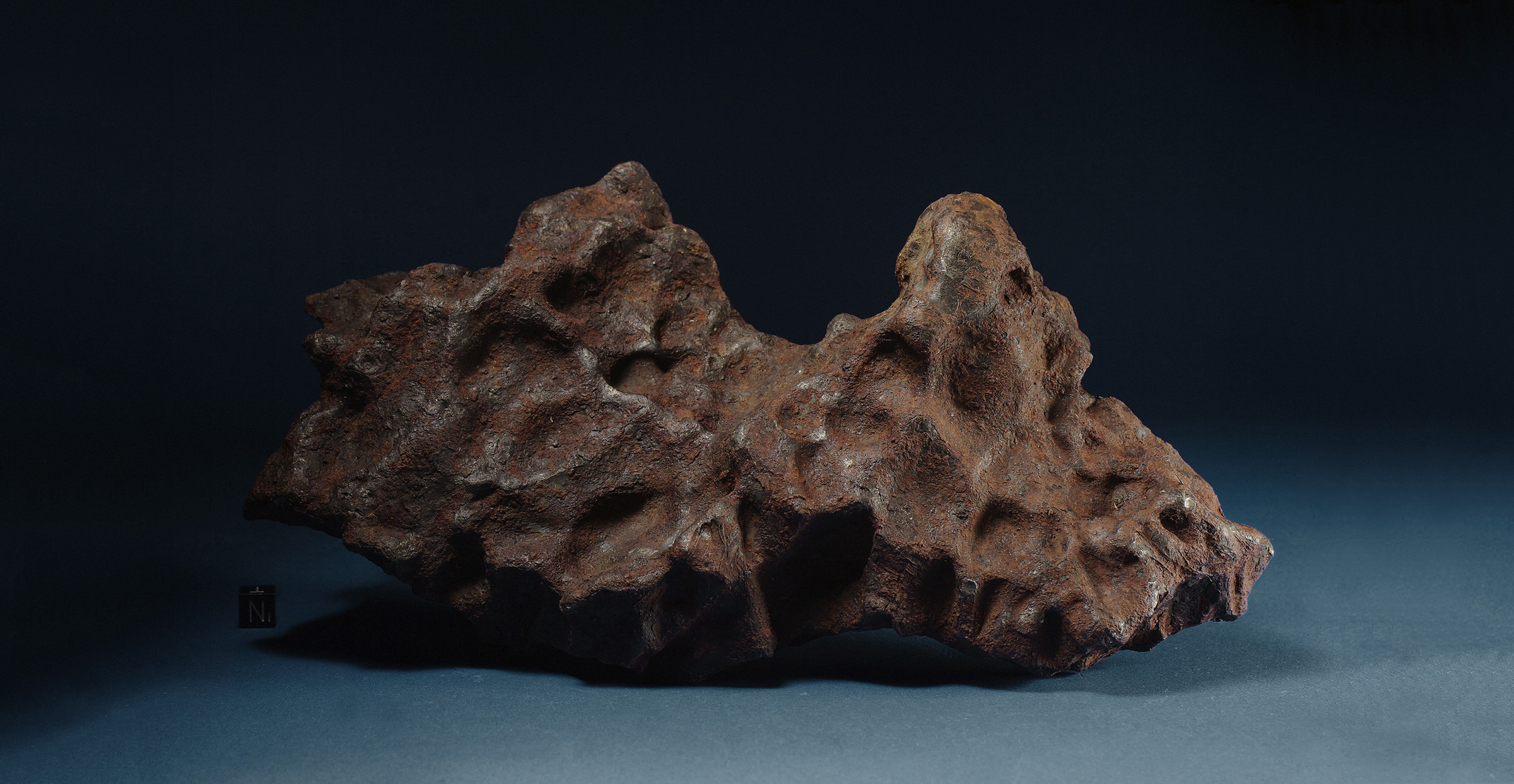
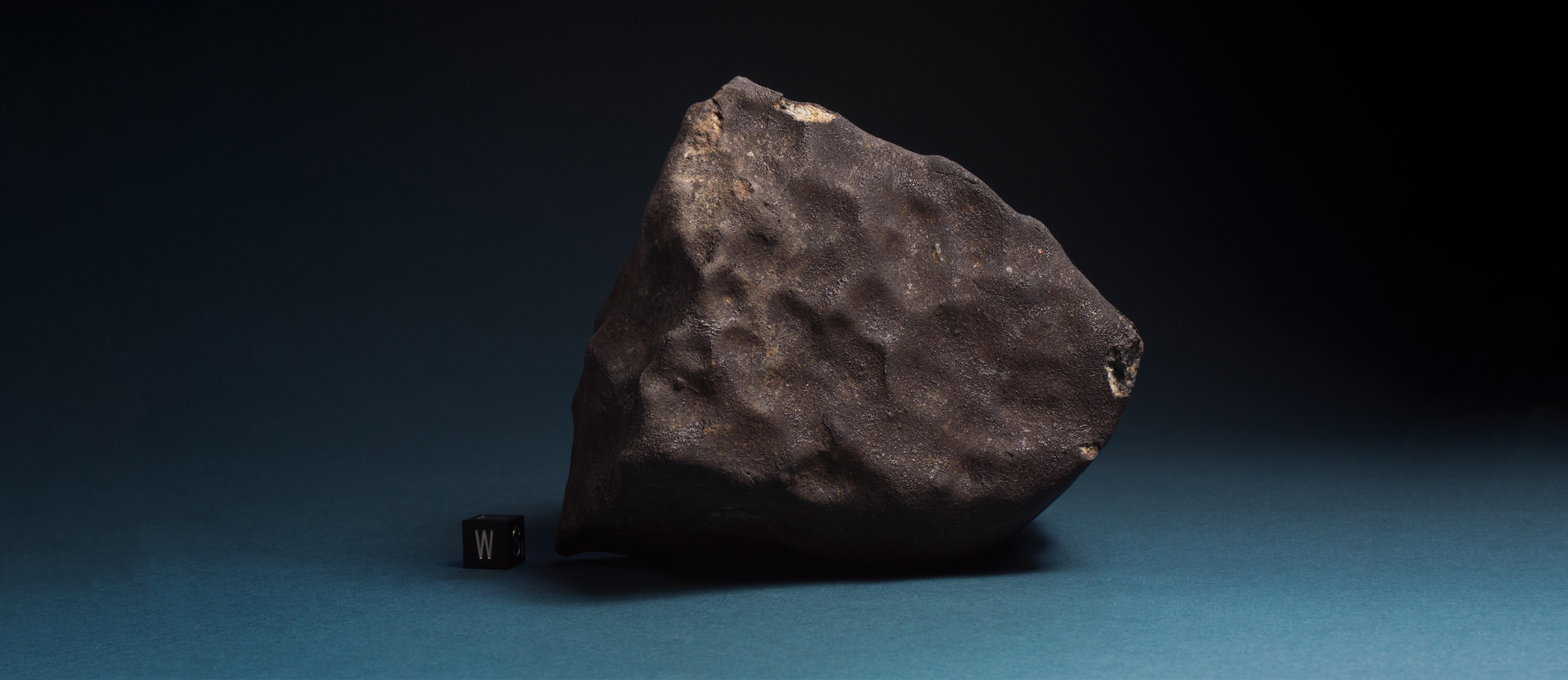
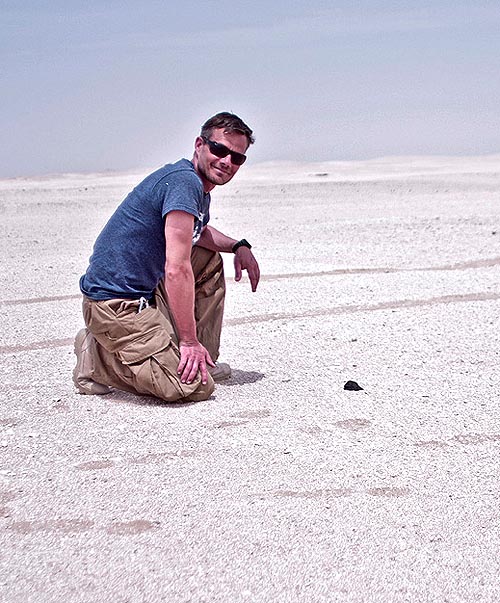
And we are lucky too this day. A small unimpressive pebble, not even 30 grms, reveals as a chondrite with a high ammount of iron. While searching the closer surrounding we make an unxpected discovery. Together with neolithic ceramic, silex blades and two grinding stones we find lumps of iron ore. A natural occurrence of the iron on the spot can be excluded. Remains of slag abundant at the finding site suggest that the iron ore was brought to this place to smelt it.
But apart from the coincidence of the finds there is no direct link between the meteorite and the neolithical activity in the area. However, it is most certain that the late neolithic inhabitants of the Sahara collected meteoritic iron systematicly and that they also worked tools out of this extremely superior material. Archaeological finds from northern Europe, Persia and from ancient Egyptian tombs support this hypothesis. The hieroglyph used by the ancient Egypts to express the term "metal" means as much as "iron that fell from the skies". And the most prominent example for the pharaonic knowledge of extraterrestrial iron is a dagger made of meteoritic iron Howard Carter discovered among the burial objects in the tomb of Tutankhamun in the Valley of the Kings.
|


Numerous petroglyphs and engravings tell about more humid periods in which most parts of the Sahara were populated. Three major phases can be described, two can bee seen in the pictures. The oldest (top, elephant hunting scene) is dated until 12.000 B.C. which is equivalent to the end of the last ice age. Apart from naturalistic animal and hunting illustration the "Round Head Phase" from 7,000 to 5,000 B.C. shows a broad variety of stylized figures that refer to the mythologic imagery of the early hunter clans (bottom).
|
|
Another hint to the early industrial workmanship of meteorites is found in the statistics. The ratio of iron meteorites compared with the total number of falls is around 4 percent. As a matter of fact the fraction of irons compared to the total number of meteorites recovered from the African deserts is only 0.2 percent. Until today the enigmatic missing of the desert irons is an unsolved question.
Provided that the pre islamic inhabitants of the Sahara, like their northern European contemporaries, collected and traded meteoritic iron as a raw material over longer periods then one has an indication for the loss of these irons. For in the region of the Air Mountains the first iron arrow- and harpoonpoints are documented as early as 2,400 B.C.. Thus there is a period of more than 4,000 years until today in which the early nomads could have harvested the meteoritic iron from its deposits.
The next day we finish fieldwork west of the Air and prepare for the long journey into the central Ténéré. But before we cross the Air Mountains we navigate towards Arlit to restock our supplies.
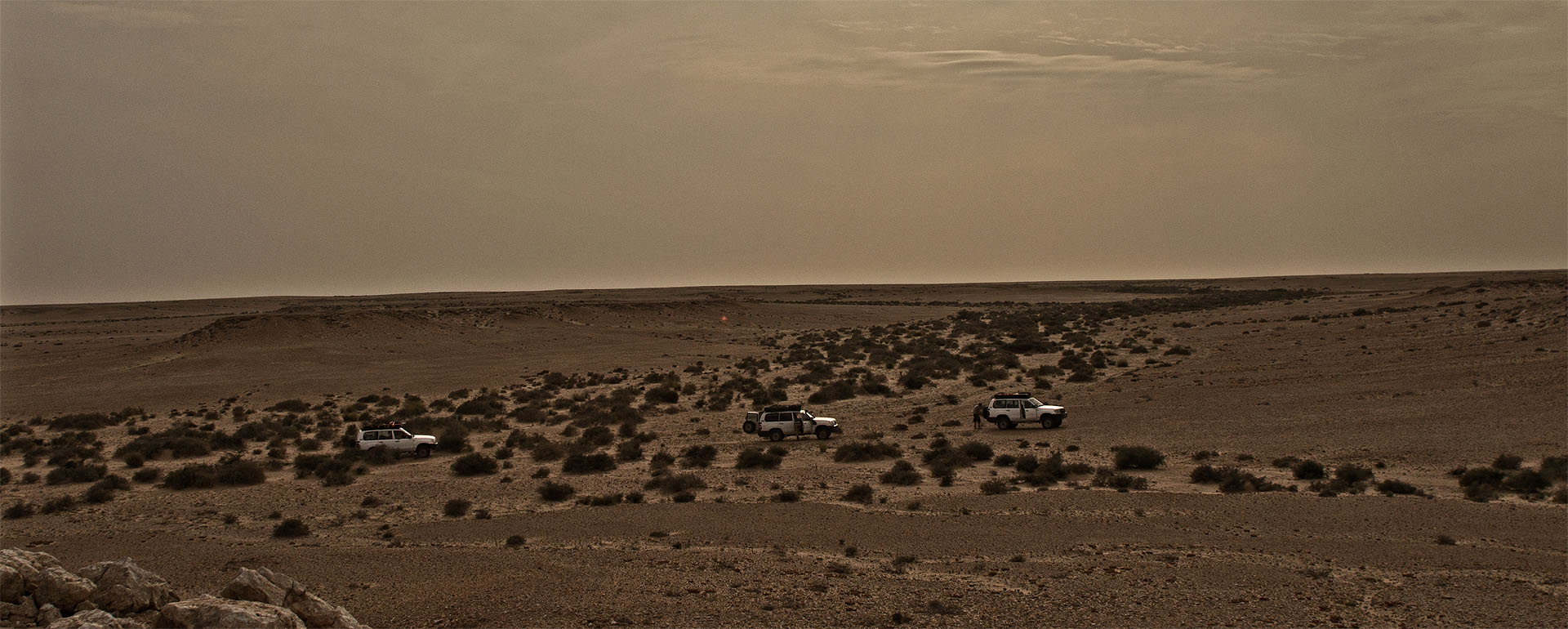
Elkontchi, son of the Locust and one of the best drivers I've seen in difficult terrain, knows the area we now pass from the days of the rebellion. He tells us about artificial hills some 100 miles west of Arlit. We decide to change course and to visit the place. Soon a pre-islamic burial ground comes in sight. More than forty grave mounts are stretched over an area of three by six kilometers. A few of them 18 feet tall with a diameter of almost 90 feet.
www.niger-meteorite-recon.de
Niger 2002 - illustrated report
go to page: 1 | 2 | 3 | 4 | 5 | 6 | 7 | Team | Area Map
|
|

|